

By Bradley Honnor
As an experienced psychotherapist and close observer of human behaviour, I’ve learned to understand the subtle actions that point to an individual’s likely leadership capabilities. By doing this, I’ve identified traits that point to an impactful leader, but also those that may hinder effective leadership. So what do I think are the five tell-tale signs of a poor leader?
Sign 1: A lack of engagement and interest
Poor leaders often fail to engage in a positive way with their teams, resulting in negative experiences when they do communicate. A fixed mind set leads them to dismiss new ideas with the belief that ‘it’s always been done this way’, leading to frustration within the team. Regular disinterest, and the impression of always being too busy, are additional negative traits that I see all too often. In contrast, a good leader will display genuine interest, actively participate in discussions and be open to learning or highlighting elements that could be communicated for the wider team’s benefit.
Sign 2: Inconsistent or unclear communication
Poor leaders often struggle to communicate effectively, relying on impersonal means such as emails to fire out instruct
ions and tasks. Meaningful connections with team members through personal interactions aren’t established, leading to misunderstandings, poor team engagement and an undermining of a team’s cohesion and effectiveness. While not all effective leaders are inspirational communicators, avoiding common communication mistakes is important for maximising team performance.
Sign 3: Inability to balance leadership priorities
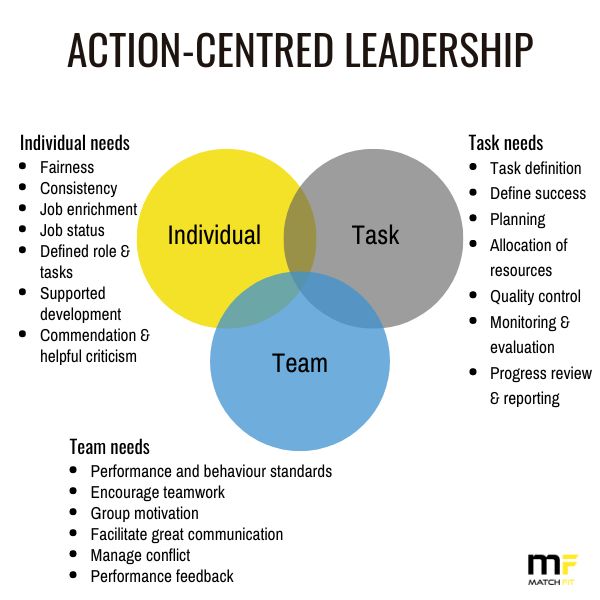
Another common trait of poor leaders is the inability to effectively balance the needs of the team as a whole, individual team members and task completion. Worse, the need to balance these three important elements is not even understood!
John Adair, one of the UK’s leading authorities on leadership, has produced a useful model covering this issue.
Adair argues that if a leader is all about the individual, they will lack the necessary focus to develop a cohesive team. If they focus on team performance too much they might ignore the contribution and needs of the individual. And if they are too task focussed, the performance of the team and the individuals within it will begin to suffer.
Competent sales people or those with deep technical knowledge of a particular issue offer an interesting example here. Such individuals are frequently promoted into leadership roles because of their personal contributions, but will often be task focussed and not think about individual team members and the team as a whole. Because they themselves are able to deliver tasks effectively, they might lack the ability to consider the pressure a colleague is under, or the impact of giving them a significant task at short notice.
An effective leader will have a more rounded skillset. They will bring on each individual, develop the team as a whole and focus on what needs to be done and achieved, including taking responsibility and accountability. Football managers are examples of leaders who need this rounded approach: to inspire the team, keep individual team members confident and performing well, and have a strategy for winning the game.
Sign 4: Lack of endorsement from colleagues
At MatchFit, we regularly work with individuals and teams to develop their leadership capabilities. During this process, conversations inevitably occur about their leaders and whether they are having a positive or negative impact on those in the room.
Poor leaders typically lack the respect and confidence of their colleagues, a reflection of their ineffective leadership style. In contrast, effective leaders earn respect through their actions, integrity, and ability to inspire and motivate others.
Sign 5: Inability to deliver results
Ultimately, leadership is measured by results. Poor leaders often preside over declining morale, sub-par team performances, and diminishing financial outcomes. Their inability to create a high-performing culture and achieve tangible outcomes undermines the organisation’s success. Conversely, effective leaders demonstrate a track record of success, inspiring confidence and driving performance through strategic vision, collaboration and accountability.
Assessing leadership, of course, is always complex and rarely clear cut. A leader might excel at team and individual engagement, yet lack vision, clarity, and the ability to lead the team to make a useful contribution to the business. The lesson, then, is one of self-awareness – and the willingness of a leader to continually evolve and develop.