Sam Stevenson

A Christmas Case Study: The Leadership Secrets of Santa Claus

In the heart of the North Pole lies one of the most remarkable organisations in the world: Santa’s Workshop. Year after year, this high-performing team delivers billions of gifts on a single night with flawless execution and unshakable morale. How does Santa Claus, CEO of the ultimate global logistics and manufacturing enterprise, achieve such extraordinary results?

It all comes down to his leadership philosophy—a masterclass in inspiring teams, fostering productivity, and creating an enduring culture of excellence.

The Origins of Santa’s Leadership Journey

Santa Claus wasn’t always the exemplary leader he is today. Legend has it that in his first year, the operation nearly collapsed under poor planning. Toys were mismatched, reindeer bickered over their roles, and Santa himself got stuck in a chimney. The chaos was a wake-up call.

Santa realised that success wasn’t just about having a team; it was about leading a team. Over the next year, he studied natural leaders—from snowflakes that unite to form a blizzard, to penguins working together to survive harsh winters. By the next Christmas, Santa had laid the foundation for what would become one of the world’s most celebrated leadership styles.

Santa’s Seven Leadership Principles

Through centuries of experience, Santa has refined his approach into what his team calls Santa’s Seven Secrets of Success. These principles form the bedrock of his organisation’s culture and performance.

  1. Everyone Matters
    Santa knows that the workshop’s success depends on its people. He ensures every elf and reindeer feels valued, seeking their input on everything from toy designs to operational efficiencies. One year, an elf named Jingle suggested adding glitter to wrapping paper—a simple idea that became a game-changer for customer satisfaction. 
  2.  
  3. Culture of Joy
    Santa recognises the connection between happiness and productivity. His workplace is filled with positive energy, from festive carolling to frequent hot cocoa breaks. He fosters an environment where people love what they do, because “joy isn’t just what we deliver; it’s how we work.”
  4.  
  5. Clear Goals with Purpose
    Santa communicates objectives that are both specific and inspiring: “Every gift must bring a smile.” He aligns the team around a shared purpose—spreading happiness worldwide—making even routine tasks feel meaningful.
  6.  
  7. Leverage Strengths
    Santa is a master at matching talent to task. Creative elves drive product design, precision-focused elves handle quality control, and the swiftest elves manage toy assembly. Even the reindeer are deployed strategically, with Comet leading navigation and Prancer overseeing pre-flight choreography.
  8.  
  9. Empower Through Trust
    Santa empowers his team with autonomy and confidence. “I trust you to do your best,” he often says, fostering accountability and a sense of ownership. The team trusts Santa in return, knowing he always has their back.
  10.  
  11. Celebrate Success
    After every Christmas, Santa hosts a year-end celebration. The team reviews achievements, shares stories, and reflects on the impact of their work. Santa’s consistent acknowledgment of contributions fuels loyalty and motivation.
  12.  
  13. Lead by Example
    Santa is a hands-on leader, deeply involved in planning and execution. Whether he’s fine-tuning the Naughty-and-Nice List or leading the sleigh team on Christmas Eve, he demonstrates the work ethic and commitment he expects from his team.

Turning Challenges into Opportunities

Santa’s leadership was tested one foggy Christmas Eve when adverse conditions jeopardised the entire operation. While others doubted, Santa remained calm. He identified an underutilised resource—Rudolph, a reindeer often overlooked for his shiny red nose.

“Rudolph,” Santa said, “your unique ability can lead us through the storm.”

Santa’s decision highlighted his knack for spotting hidden potential and building a culture of inclusion. The team rallied, and Rudolph’s success not only saved Christmas but became a defining moment for the organisation’s values.

The Secret Sauce

Santa’s Workshop thrives not because of magic (though it helps) but because of his leadership. By valuing people, fostering joy, and leading with purpose, he has created an enduring model of excellence.

When asked about their success, Santa’s team always gives the same answer:
“It’s Santa. He believes in us.”

This story is more than a tale of Christmas cheer—it’s a timeless blueprint for leaders who aspire to inspire greatness. Santa reminds us that with trust, vision, and a dash of celebration, any organisation can deliver results that seem impossible.

The End.

Wishing you a very Merry Christmas from the MatchFit team

If you’d like to learn more about our MatchFit leadership programmes, take a look at our information pages here, or why not get in touch? enquiries@matchfitclimb.com

A Christmas Case Study: The Leadership Secrets of Santa Claus Read More »

Humans in Leadership: Unlocking the Potential of Leadership Teams

Change is inevitable—it either happens to us, or we take control and make it happen. For leadership teams, embracing change with purpose and agility is essential. Leadership is not merely a title; it is a set of behaviours that inspire and influence those around us. Through extensive analysis of thousands of leaders, MatchFit has been able to develop a critical insight into what drives high-performing leadership teams.

Taking an evidence-based and phenomenological approach, MatchFit has identified three Core Components that form the foundation of exceptional leadership: Purpose, Pivot, and Pace. These elements, combined with a deep understanding of human dynamics, enable leaders to overcome challenges, align teams, and achieve sustainable success.

  1. Purpose – moving forward with certainty
    Leaders with purpose drive clarity and direction. They provide a vision that inspires confidence and unites teams around shared goals. Purpose is about moving forward with certainty, ensuring that every team member understands the bigger picture and how their role contributes to it.
  2. Pivot – reading the horizon and changing
    The ability to adapt quickly to changing circumstances is crucial in today’s fast-paced world. Pivoting means reading the horizon, anticipating challenges, and making proactive adjustments. Effective leaders know when to change course and bring their teams along with them.
  3. Pace – being responsive, informed, and quick
    Leadership requires agility. High-performance teams operate at a pace that keeps them ahead of the curve, balancing speed with thoughtful decision-making. Leaders who are responsive and informed can act decisively while maintaining the trust and confidence of their teams.

Enablers and inhibitors of effective leadership

Leadership does not exist in a vacuum. Certain factors either enhance or hinder the execution of the Core Components. Positive dynamics such as clear communication, strong leadership, and a supportive work environment act as enablers, creating collaboration, motivation, and purpose. Conversely, inhibitors like poor communication, lack of direction, or a toxic culture can stifle progress and undermine team performance.

External factors also play a role. Market shifts, economic conditions, and technological advancements can either open new opportunities or present challenges that demand a strategic response. By recognising and managing these influences, leaders can create an environment that enables high performance and resilience.

The HUMANS in Leadership model

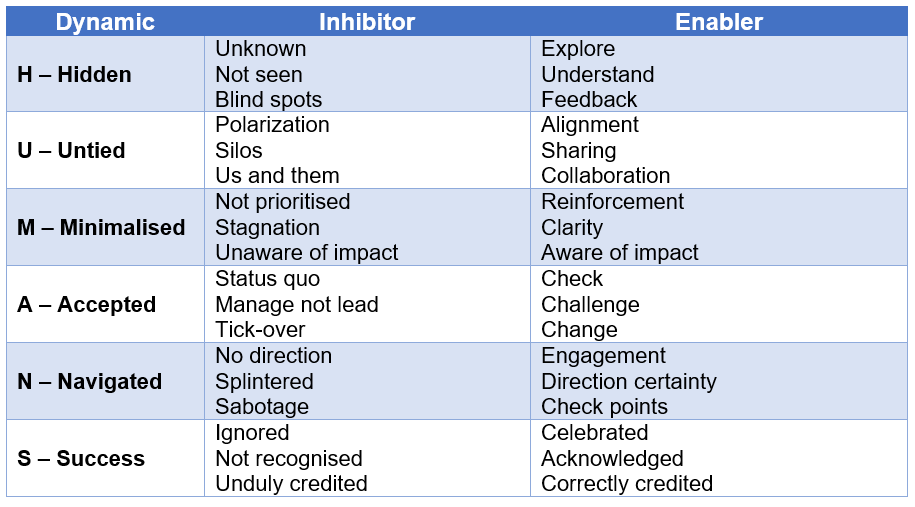
To help leadership teams effectively address these dynamics, MatchFit has developed the HUMANS in Leadership model. This framework highlights key areas that leaders must address to overcome inhibitors and maximise enablers, ensuring a thriving, high-performance culture.

Applying HUMANS to leadership teams

The HUMANS model is particularly effective in improving the dynamics of leadership teams. By addressing each component, leaders can identify and eliminate inhibitors while building enablers that drive success.

  1. Hidden
    Blind spots often prevent leaders from seeing the full picture. By exploring and seeking feedback, teams can uncover unknown factors and address them proactively. This creates transparency and builds trust within the team.
  2. Untied
    Silos and polarisation fragment teams, reducing efficiency and collaboration. Leaders who focus on alignment and sharing create a unified team that works cohesively towards common goals.
  3. Minimalised
    When leadership behaviours are deprioritised, teams stagnate. Leaders must reinforce clarity and demonstrate the impact of their actions to maintain momentum and inspire their teams.
  4. Accepted
    Complacency can trap teams in a cycle of maintaining the status quo. Leaders who challenge the norm and drive change ensure their teams remain innovative and forward-thinking.
  5. Navigated
    Without clear direction, teams flounder. Engaged leaders who set clear checkpoints and provide certainty can guide their teams with confidence.
  6. Success
    Ignoring or miscrediting success demotivates teams. Celebrating achievements and recognising contributions fosters morale and strengthens the bonds within the team.

Leadership Behaviours for the Modern Era

High-performance leadership teams do not rely on rigid hierarchies or outdated frameworks. They thrive by embracing behaviours that support their teams as humans—individuals with unique experiences, perspectives, and contributions. The HUMANS model reminds leaders that their role is to align, enable, and inspire their teams through meaningful actions.

By combining the 3Ps—Purpose, Pivot, and Pace—with the principles of the HUMANS model, leaders can create a culture that prioritises collaboration, innovation, and resilience. These behaviours set a standard for leadership that embraces change and makes it happen.

Leadership is not about holding a title; it’s about taking action. With MatchFit’s insights and tools, leadership teams can unlock their potential, driving performance and creating workplaces where everyone thrives. The future of leadership is human—and it starts with embracing what it means to lead.

If you’d like to learn more about our MatchFit leadership programmes, take a look at our information pages here, or why not get in touch? enquiries@matchfitclimb.com

Humans in Leadership: Unlocking the Potential of Leadership Teams Read More »

Matching values – the importance of selecting the right L&D partner: an Interview with Nick West of Julius Baer

Matching values – The importance of selecting the right L&D partner

An interview with Nick West, Head of Learning and Development at Julius Baer International.

Having had a long association with MatchFit and MD Bradley Honnor, we caught up with Nick to find out what he looks for in a training and leadership development partner, and how the MatchFit approach has helped solved some of his career challenges.

To begin, we asked Nick about his career to date.

“I’ve spent 35 years primarily in banking and finance, starting in sales at Lloyds working for Black Horse Finance. When I became a branch manager, I supported work on learning and development packages and became more interested and involved in people development – I’d been a sports coach from a young age and there was a degree of congruence for me. From supporting the groups sales training in the branch I moved into sales support across a branch network and then into training for our call centre. My next career step took me into the Defence sector with the MoD; primarily onboarding, mid-career and leadership development. From there I moved to Old Mutual Wealth, which is a South African heritage wealth business, once again supporting early careers, leadership development and building out an L&D function. My last role before Julius Baer was for the UK’s Banking and Finance Trade Association – UK Finance, where I re-built a team outside of HR focusing on commercial L&D delivery to members. Over two years we built out a sustainable model of delivery which reflected members needs across the industry.

And how did the MatchFit connection come about?

“After a few rebrands, Old Mutual Wealth became Quilter in the UK. That’s where Bradley and I met originally. When I arrived, the team needed to rebuild and grow and we had incredibly broad training needs across the business with little ability to deliver to a business numbering close to 5000. In order to take first steps we used external suppliers and Bradley was a part of this team.

It was quickly clear that Bradley has an innate ability to flip his skills to suit different groups people. He would stand in front of a senior relationship manager and we would get very strong feedback, as easily as he could a new apprentice. He had a good understanding of people and was able to adjust his delivery to match the needs of the business, or the people we were putting him in front of. He also had a lot of learned experience that brought the sessions to life.

So, when we moved over to a tender process and selected a supplier for a Managed Learning Service, we asked Bradley to join the new team. As a key delivery mechanism for face-to-face training Bradley and his business took time to get to know us even better and build a deep knowledge of who we were and what we did. Most importantly they got to know our culture and were able to reflect this across a wide range of activities. Towards the later stages of our time, we partnered to deliver the UK business’s Leadership Programme for over 200 Leaders across the UK; supporting the strategic growth direction of the firm and building on from a Global programme.

How did you reconnect professionally?

Julius Baer is a private banking corporation founded and based in Switzerland. Established as a traditional private bank and named after Swiss banker Julius Baer, it provides investment management, real estate financing, wealth management, and select offerings in sales and trading based on an open and managed architecture. Julius Baer employs a staff of over 6,600 worldwide with a  Global HR function, and a Global Learning and Development function; the Julius Baer Academy. Around 35 people work for the Academy, delivering learning and development across the entire globe for the business. We asked Nick whether this had posed any particular challenges?

The Head of L&D role at Julius Baer International, which is the UK business, was brand new. As the business was growing, there was an understanding that people are a competitive advantage and growing the business would require investment in people.

As JBI grows, we focus on ensuring our investment in our people is linked to our strategic goals and their career aspirations and setting up the function has been centred around delivering significant corporate content alongside bespoke personal development. We have delivered a Leadership Programme, a yearlong series of activities focused on our Women in Wealth (our internal colleagues) and we have begun to build a back bone to embed L&D.

Globally the role sits within the JB Academy; the business’s L&D function, which reaches across all our people and locations. The ability to reach out and draw on existing JB expertise and knowledge, global programmes and their offerings has been invaluable. In return we have deepened their knowledge and understanding of our regulatory environment.

As this relationship has grown, we have begun to deliver programmes of work which have global reach, last year leading the launch of a new approach to employee on-boarding. MatchFit have been instrumental is this progress.

Through existing relationships across the sector, I had already introduced Bradley (under the MatchFit brand) to Julius Baer several years prior to my arrival – I felt his business had the skills and expertise to help JBI in the initial stages of preparation for expanding L&D in the UK. When I joined the business in 2022, we directly re-connect on active delivery, reinforcing a now decade old relationship.

Working with MatchFit now includes coaching, Leadership Development, career development and we have invited them to be a part of our Leadership Programme tender process.

We asked Nick how he was able to introduce UK suppliers to the global mix

The strength of our relationship as a function with each other as an Academy and the business means we can take advantage of the skills needed on any given project  and connect each other’s initiatives. As my role and function has grown within the UK and I have added high quality suppliers the business values, we have been able to expand some of these offerings beyond the UK, giving colleagues around the world access to more development and enhanced our supplier pool. The extent of their success is always built on the quality of the partnership and the delivery.

We are looking for partners willing to get to know us, understand our business and our people and build with us. Often we see training companies who simply want to deliver off the shelf and make money rather than build a true partnership that benefits both firms and helps us both grow.

We asked Nick if he didn’t already know MatchFit, how would he go about evaluating whether they could be a fit for the business?

“Part of my job early role activity was to assess the portfolio of providers that had been working in the learning space and supporting a part-time consultant with the business.

I’m never really looking for a supplier, unless we’re doing a one-off event where I want a speaker, for instance. Most of the time, I need a group of partners to work with us. The difference to me is a supplier tends to get into a ‘supply of client’ relationship i.e.. ‘What do you want? Tell me and I’ll do it’. The danger of that is they don’t ask questions; they don’t challenge, and they don’t present new ways of thinking..

So what am I looking for? Well, flexibility, commercial awareness, an understanding of the industry we’re in, or an ability to translate current delivery into this industry, are important. A willingness to understand our people is vital.

What we look for are supplier who helps us solve a challenge.

MatchFit meet that requirement. They already have strong reputation across the industry, a high-quality catalogue of content and good people in their associate pool.

We are looking for a partner with the right skills, for someone who says, ‘You shared your challenge with us, but we’ve done a little bit of digging around, and we think there is a different or broader challenge  We have ideas that would help you and we can help you to build a better and broader solution together.’ Personally, I want someone who is going to look at each opportunity like every opportunity like that, and ultimately, that matches the culture and values within JBI. I’m able to see the fit between the values of MatchFit and ours and I know MatchFit are not afraid to say ‘we think the issue is different to what you initially thought’.

Bradley isn’t afraid to tell us.

We asked what part early analysis plays in the process

“I think a mistake often made in learning and development is that when someone comes to you with a problem to solve, you only have that person’s view on the problem. Experiences shows that you always need to get someone else’s view on what the problem is as well, otherwise you’re just making a set of assumptions.

There could be a fundamental difference of opinion – someone might come to you and say, ‘We can’t do this task because we don’t know how to hold that conversation with our client’, for instance, but the head of sales might feel the conversation’s irrelevant to the actual task. The upfront analysis MatchFit do really helps to crystallise what the problems or challenges really are, not what they’re perceived to be. Even for me, as head of learning and development, it’s still really easy to make assumptions on what I see as the challenge. So the analysis helps you understand what the real challenge is, and how we do something about it for the future, rather than just training people do something better next week. How do we change behaviour long term? And that’s what we’re looking for – long term impact.”

How important is measurement to the process?

“I would say that what gets measured gets done! If you put people on a course and you don’t do any form of measurement, how are you ever expecting there to be any change? Because the very act of measurement means that people have to go and practise those skills. The measurement indicates the direction of travel as a result of that practise. In our business, when we talk about performance, we mean how someone performs as a person, and that includes their personal life, work life; as a whole.   

And that doesn’t mean we want you to be 100% between nine and five so we can get the best out of you. It means we want you to be the best person you can be, and bring that to our business. This comes all the way from the top, from our CEO. He is absolutely 100% about asking, ‘What is the best that we can do? And, ultimately, why?’ If we designed a programme that didn’t match, then it wouldn’t fit our culture.

So we are looking for partners who can make a real difference to the people they work with. Bradley and I will often have conversations around the skills people pick up that won’t really be useful in the day-to-day business, but they might be useful to them on a personal level. And if they’re better in their home life, it could help them be better equipped to perform in their work life. If we’ve got something horrible going on at home, it’s harder to perform at work and vice versa. So if we can upskill people in a number of areas of their life, then performance is naturally going to follow.”

How was credibility of UK partners built in the eyes of the global business?

It’s about building a reputation. I may be part of an academy that sits at a global level, but I am also judged on my local level against performance and delivery. I want to build a model here that really makes a difference to the global business, and as a business, we’re going through a lot of change For some teams that change can have significant impact and Bradley has experience of addressing this issue. When we bring him in the teams are able to make significant change.  Bradley helps them on the journey and to chart a way forward.

As a business we are managing generational money. We are looking to  develop skills in our people that sit alongside our investment approach and this is a  lifelong learning approach. Everything about us puts the client at the heart of what we do. And therefore we need the best people. My job is to make those people the best they can be in the long term. MatchFit help to make that happen.”

If you’d like to learn more about our MatchFit leadership programmes, take a look at our information pages here, or why not get in touch? enquiries@matchfitclimb.com

Matching values – the importance of selecting the right L&D partner: an Interview with Nick West of Julius Baer Read More »

Is collaboration paralysing decision-making? A MatchFit perspective

Today’s business landscape is rapidly evolving. One positive trend is one toward collaborative working environments, reflecting the growing recognition that diverse perspectives lead to better, more innovative, decisions. However, this very trend is leading to an unintended consequence: a paralysing lack of timely decision-making. While collaboration fosters inclusivity and shared responsibility, it can also slow down processes, creating indecision and delays. This article explores how the pursuit of consensus can result in decision-making paralysis and the impact this can have.

The welcome rise of collaboration

The idea of collaborative decision-making stems from the belief that multiple perspectives enrich the entire process. When various stakeholders are involved in a decision, it is less likely that a critical viewpoint will be overlooked. In addition, involving a broader group in decisions helps ensure that responsibility for any negative outcomes is shared, reducing individual blame.

However, the pursuit of consensus can often lead to an endless cycle of meetings, discussions, and revisions. The desire to have everyone on board can create a situation where decision-making becomes paralysed, with stakeholders continuously raising new questions and concerns. This approach, while inclusive, can be counterproductive when it comes to getting things done in good time.

The impact on supplier partners

The impact of this trend toward excessive collaboration is particularly pronounced when it comes to suppliers. They rely on timely decisions to plan, allocate resources, and deliver services. When decision-making is delayed, suppliers are left in limbo, unable to move forward.

For example, imagine a scenario where a company is in the process of selecting a marketing partner for a campaign programme. Initially, the project is set to go live in September and a plan is in place. However, as more stakeholders are brought into the decision-making process, new ideas and concerns emerge. A committee is formed, and the original plan is revised multiple times. The result? The project is delayed by five months, leaving the training partner unable to support the client as planned. This scenario is not uncommon in our experience!

The cost of indecision

Indecision is costly – it can lead to missed opportunities to prevent a problem developing into a crisis, retain staff or steer employees through a difficult period of change.

The inability to finalise decisions can also strain relationships. Moreover, it can undermine trust and confidence in leadership. Team members may begin to doubt the competence and effectiveness of their leaders, which can erode the overall team cohesion and collaboration. It can also lead to a culture of indecisiveness, where team members become hesitant to take initiative or make decisions on their own, fearing that their actions may not be supported or approve

The fear factor – why is decision-making so hard?

One reason we see for the increasing difficulty in making decisions is the growing fear of making the wrong choice. In a culture where mistakes are harshly judged and blame is quickly assigned, there is a natural tendency to seek the safety of consensus. By involving more people in the decision-making process, individuals can protect themselves from being solely responsible for any negative outcomes. However, this fear-based approach prioritises risk avoidance over progress.

In addition, the shift toward remote and hybrid working environments has also contributed to the complexity of decision-making. With teams now dispersed across different locations, getting everyone together to make a decision can be challenging. This can lead to longer decision-making processes, as organisations struggle to coordinate and communicate effectively in a virtual environment.

Striking a balance – how to collaborate without bringing decision-making to a standstill

So, how can organisations strike the right balance between collaboration and effective decision-making? The key lies in establishing clear processes and guidelines, so that collaboration does not become a barrier to progress.

6 tips for reaching a decision

  1. Define roles and responsibilities

It’s essential to have a clear understanding of who is responsible for making which decisions. There should be a designated end-person who has the final say. This individual should have the authority to make decisions swiftly, with input from the team, but without being bogged down by endless revisions and discussions.

  1. Set clear timelines

Establishing deadlines for decision-making is crucial. When decisions are left open-ended, they are more likely to be delayed. By setting clear timelines for when decisions need to be made, the endless cycle of discussions can be avoided.

  1. Prioritise

Not all decisions require the same level of collaboration. For more routine, less critical decisions, it may be more efficient to have a smaller group of stakeholders involved. More extensive collaboration can then be reserved for decisions that truly require it.

  1. Encourage a Culture of Trust

Build a culture of trust, where individuals feel safe to make decisions without fear of blame. This can be achieved by emphasising that mistakes are a natural part of the learning process and that taking calculated risks is necessary for growth.

  1. Streamline the process

Review decision-making processes to identify areas where collaboration may be slowing things down. By streamlining processes and reducing unnecessary steps, decisions can be made more efficiently without sacrificing the benefits of collaboration.

  1. Publish the decision

Communicate that the decision has been made. Ensure all of the people that need to know what has been decided are informed.

While collaborative working is essential for creating diverse perspectives and achieving buy-in, it’s important to recognise that it can also affect the speed of decision-making. This can not only be costly in terms of missed opportunities for the organisation, but it also has implications for suppliers, who are often impacted by the delays. To avoid the pitfalls of indecision, it’s important to strike a balance between collaboration and timely decision-making. By defining roles, setting clear timelines, and building a culture of trust, businesses can ensure that collaboration enhances, rather than hinders, their decision-making processes. For suppliers, this means more reliable timelines, better relationships, and the ability to deliver on their commitments.

If you’d like to learn more about our MatchFit leadership programmes, take a look at our information pages here, or why not get in touch? enquiries@matchfitwith.com

Is collaboration paralysing decision-making? A MatchFit perspective Read More »

The role of AI in coaching and therapy: enhancing, not replacing, human connection

In recent years, artificial intelligence (AI) has become a buzzword across industries, from finance to healthcare, and the fields of business coaching and therapy are no exception. As someone deeply invested in the well-being and development of people, I understand the curiosity—and sometimes concern—surrounding AI’s growing role in our work. So I’d like to share some thoughts on what’s new in this space, the potential risks, how AI can actually help us, and why we as humans have nothing to fear. Our unique capacity for empathy and phenomenological engagement is what will keep us at the heart of this important work.

What’s new in AI and human behaviour?

AI’s capabilities have grown exponentially, particularly in analysing data, recognising patterns, and even simulating emotional responses. In coaching and therapy, AI is now being used to provide data-driven insights, personalised interventions, and continuous feedback. For instance, AI can analyse client progress in real-time, offering valuable insights that can help coaches and therapists adjust their approaches more effectively.

Furthermore, the development of AI-powered tools like chatbots and virtual assistants has made it possible to maintain client engagement outside of traditional sessions, offering support 24/7. Virtual reality (VR) combined with AI is also opening new avenues for immersive experiences in therapy, allowing clients to practice coping mechanisms or leadership skills in controlled environments.

The risks and ethical considerations

Despite these advancements, it’s natural to worry about the potential risks. One of the primary concerns is the idea of AI taking over roles that require deep human empathy and judgment. Can a machine really understand the intricacies of human emotions? Can it provide the same level of support as a trained professional who brings years of experience and intuition to the table?

There are also ethical implications to consider. The use of AI in areas involving personal and sensitive information raises questions about data privacy, consent, and the potential for AI to make decisions that could impact someone’s mental health or career. Trust is a cornerstone of any coaching or therapeutic relationship, and there’s a legitimate concern that over-reliance on AI could erode this trust.

How AI can help, not replace

However, it’s important to recognise that AI, when used thoughtfully, can be a powerful tool that enhances our work rather than replacing it. AI excels at handling administrative tasks, analysing vast amounts of data, and providing real-time feedback—all of which free us up to focus on what we do best: connecting with and helping our clients.

By taking on routine tasks, AI allows us to spend more time on personalised, high-impact interactions. For example, AI can handle the scheduling of appointments, send reminders, and even conduct initial assessments, enabling us to dedicate our energy to the actual coaching or therapeutic process. Moreover, AI can assist in identifying patterns or potential issues that might not be immediately apparent, giving us more information to work with as we tailor our approach to each client’s unique needs.

But do we need to worry?

The fear of AI taking over human roles is understandable. But while AI can simulate certain aspects of empathy, it cannot truly “feel” or understand in the way that we do. Our intuition, our ability to sense when something is off, and our capacity to adapt our approach in the moment are qualities that AI simply cannot match, at least not yet. These human qualities are not just important; they are essential.

AI cannot replicate the deep, empathetic connections that are central to effective coaching and therapy. Our work is not just about providing advice or solutions; it’s about building trust, understanding context, and engaging with our clients on a deeply human level.

The uniqueness of human engagement

At MatchFit, we believe that our uniqueness lies in our ability to engage phenomenologically—that is, to experience and interpret each client’s reality in a way that is deeply personal and contextually aware. This phenomenological engagement is what makes our work so powerful and effective. It’s about being present, empathetic, and responsive to the needs of our clients, something that no AI can fully replicate.

While AI can support us with data and tools, it is our human touch that makes the difference. The therapeutic alliance, the trust, and the rapport we build with our clients are what lead to meaningful change. This is something that cannot be coded into an algorithm.

Incorporating AI into coaching and therapy is not about replacing human professionals; it’s about enhancing our ability to serve our clients better. By leveraging AI for tasks that it does well, we can focus on the areas where we excel—building connections, understanding context, and providing empathetic, personalised support. Our work is, and always will be, driven by the human element. AI is a tool to help us do our jobs more effectively, not a substitute for the deep, meaningful engagement that only humans can provide.

As we move forward in this exciting era of technological advancement, let’s embrace AI as a partner that can help us elevate our practice, while remaining confident in the irreplaceable value of our human expertise and empathy.

If you’d like to learn more about our MatchFit leadership programmes, take a look at our information pages here, or why not get in touch? enquiries@matchfitwith.com

The role of AI in coaching and therapy: enhancing, not replacing, human connection Read More »

Bringing the humanity to technology: what leaders need to think about

The rapid evolution of AI technology over the last couple of years is transforming the way we work. Tools like ChatGPT and other AI-driven platforms have given many of us the ability to complete tasks faster than ever before. They enhance communication, enable data-driven decision-making, and even facilitate leadership by helping managers accomplish tasks faster. However, as these technologies continue to integrate more deeply into working environments, it’s important for leaders to consider the effect on their organisations and the people that work within them.

In this article, MatchFit managing director, Bradley Honnor, looks at some of the workforce challenges leaders need to consider when looking to integrate generative AI tools into their organisations.

Completing work faster doesn’t mean less work

The benefits of this technology are clear. AI can streamline processes, generate content, and even support decision-making at speed. Tool like ChatGPT can create themed images that make for stand-out presentations, draft documents that maintain a consistent tone and style throughout or analyse and highlight the key points of a lengthy PDF. This speed and efficiency might point to a lighter workload, however, in reality it may lead to an expectation to produce more in a shorter period.

“Everybody we work with, without exception, is busy all the time with too much to do,” says Bradley. “So the reality of doing things faster by using AI tools is that employees simply take on a bigger workload than they had previously.”

The result, therefore, from the ability to generate work faster may be increased pressure, and stress, as more output is anticipated at a faster rate. Pressure can rise further if the AI tools are not working as anticipated, leading to a false expectation of increased productivity. An employee might be asked to produce a proposal by the next day with the assumption that AI will complete a proportion of the work, only for that employee to find the technology ineffective for that particular task.

“We could see a relentless cycle where, rather than reducing stress, technology actually increases it by accelerating the pace of work and compressing the time available for each task,” Bradley continues.

Leaders need to concern themselves with the human implications of a technologically driven work environment. Machines, after all, do not need rest; they can function continuously, processing information at speed without fatigue. Humans, however, don’t operate in this way. Leaders must be aware of the potential stress of trying to meet expectations in our new technology-driven world and ensure that they are not pushing teams beyond their limits.

Training and development is key to AI integration

As technology continues to advance, organisations need to invest in the continuous learning and development of their employees. This not only applies to new systems that are there to perform specific tasks, but also to tools such as ChatGPT that have more diverse applications, especially where employees are free to use these tools for their own productivity.

Helping employees better understand how to use these tools, the contexts in which their organisation would like them used and how to minimise risk can help to ensure successful integration.

Leaders too can benefit from new learnings. Adopting a growth mindset is essential to managing the challenges and opportunities presented by new technologies. Leaders with this mindset are more likely to embrace change, encourage innovation, and view challenges as opportunities for learning and growth rather than as obstacles.

Part of this learning, however, should focus on understanding the potential effects on a workforce of the introduction of new technologies with this insight helping leaders to have greater empathy and ability to manage and motivate employees. This might include how to best reassure a workforce about their job prospects and seeing technology as an enabler that helps colleagues work more effectively for customers, rather than something that will replace their jobs. How to implement guidelines and processes to reduce risk might be another subject tackled via training.

Leaders must recognise the importance of maintaining a wellbeing balance within their workforce, ensuring that the drive for efficiency does not overshadow the need for rest and recuperation. This might involve setting clear boundaries around working hours, encouraging breaks, and promoting a culture where it’s acceptable to disconnect. Technology should be a tool that enhances human capability, not something that diminishes it by pushing people even harder. Leaders need to be mindful of the pace at which they expect their teams to work and the implications this has on their wellbeing.

In a world where technology is often evolving faster than our capacity to adapt, the focus must shift towards creating a work environment that is growth focused but also respects the human need for rest, balance, and personal time. By doing so, leaders can ensure that their teams not only use technology to be productive but are also healthy and motivated, ready to meet the challenges of the future with a positive and sustainable approach.

If you’d like to learn more about our MatchFit leadership programmes, take a look at our information pages here, or why not get in touch? enquiries@matchfitwith.com

Bringing the humanity to technology: what leaders need to think about Read More »

5 tell-tale signs of a poor leader to watch out for

By Bradley Honnor

As an experienced psychotherapist and close observer of human behaviour, I’ve learned to understand the subtle actions that point to an individual’s likely leadership capabilities. By doing this, I’ve identified traits that point to an impactful leader, but also those that may hinder effective leadership. So what do I think are the five tell-tale signs of a poor leader?

Sign 1: A lack of engagement and interest

Poor leaders often fail to engage in a positive way with their teams, resulting in negative experiences when they do communicate. A fixed mind set leads them to dismiss new ideas with the belief that ‘it’s always been done this way’, leading to frustration within the team. Regular disinterest, and the impression of always being too busy, are additional negative traits that I see all too often. In contrast, a good leader will display genuine interest, actively participate in discussions and be open to learning or highlighting elements that could be communicated for the wider team’s benefit.

Sign 2: Inconsistent or unclear communication

Poor leaders often struggle to communicate effectively, relying on impersonal means such as emails to fire out instruct

ions and tasks. Meaningful connections with team members through personal interactions aren’t established, leading to misunderstandings, poor team engagement and an undermining of a team’s cohesion and effectiveness. While not all effective leaders are inspirational communicators, avoiding common communication mistakes is important for maximising team performance.

Sign 3: Inability to balance leadership priorities

Another common trait of poor leaders is the inability to effectively balance the needs of the team as a whole, individual team members and task completion. Worse, the need to balance these three important elements is not even understood!

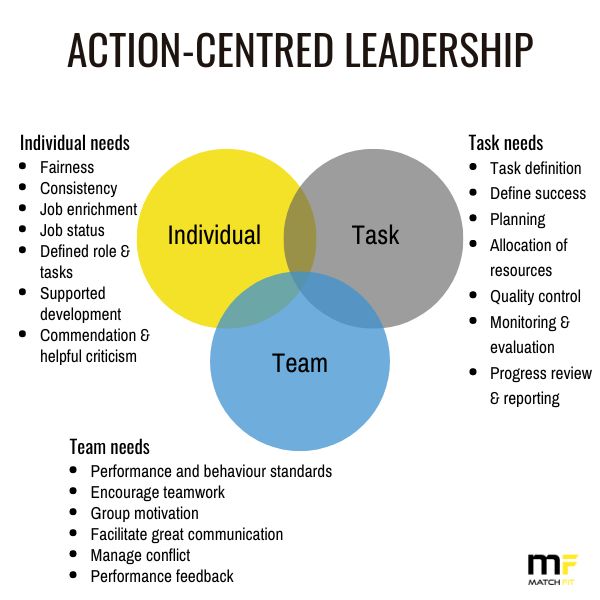
John Adair, one of the UK’s leading authorities on leadership, has produced a useful model covering this issue.

Adair argues that if a leader is all about the individual, they will lack the necessary focus to develop a cohesive team. If they focus on team performance too much they might ignore the contribution and needs of the individual. And if they are too task focussed, the performance of the team and the individuals within it will begin to suffer.

Competent sales people or those with deep technical knowledge of a particular issue offer an interesting example here. Such individuals are frequently promoted into leadership roles because of their personal contributions, but will often be task focussed and not think about individual team members and the team as a whole. Because they themselves are able to deliver tasks effectively, they might lack the ability to consider the pressure a colleague is under, or the impact of giving them a significant task at short notice.

An effective leader will have a more rounded skillset. They will bring on each individual, develop the team as a whole and focus on what needs to be done and achieved, including taking responsibility and accountability. Football managers are examples of leaders who need this rounded approach: to inspire the team, keep individual team members confident and performing well, and have a strategy for winning the game.

Sign 4: Lack of endorsement from colleagues

At MatchFit, we regularly work with individuals and teams to develop their leadership capabilities.  During this process, conversations inevitably occur about their leaders and whether they are having a positive or negative impact on those in the room.

Poor leaders typically lack the respect and confidence of their colleagues, a reflection of their ineffective leadership style. In contrast, effective leaders earn respect through their actions, integrity, and ability to inspire and motivate others.

Sign 5: Inability to deliver results

Ultimately, leadership is measured by results. Poor leaders often preside over declining morale, sub-par team performances, and diminishing financial outcomes. Their inability to create a high-performing culture and achieve tangible outcomes undermines the organisation’s success. Conversely, effective leaders demonstrate a track record of success, inspiring confidence and driving performance through strategic vision, collaboration and accountability.

Assessing leadership, of course, is always complex and rarely clear cut. A leader might excel at team and individual engagement, yet lack vision, clarity, and the ability to lead the team to make a useful contribution to the business. The lesson, then, is one of self-awareness – and the willingness of a leader to continually evolve and develop.

If you’d like to learn more about our MatchFit leadership programmes, take a look at our information pages here, or why not get in touch? enquiries@matchfitwith.com

5 tell-tale signs of a poor leader to watch out for Read More »

Effective leadership – how important is it really?

Extremely, says MatchFit’s MD Bradley Honnor

Having been lucky enough to work with business leaders all over the world, I often get asked about the importance of leadership to the prospects of an organisation. It’s safe to say that I feel having strong leaders at every level is absolutely crucial: the better you do this, the more successful you will be.

I’ve had the privilege of witnessing various leadership styles and approaches; but rather than outlining a series of leadership ‘traits’, I think it’s useful here to describe a real-life scenario I witnessed recently where an individual was parachuted into a civil service organisation that was really struggling to make the grade.

The actions of a remarkable leader

This person really stands out for me as a remarkable leader who orchestrated a significant turnaround within their organisation.

When they arrived, one of the first steps this leader took was to conduct individual meetings with every senior member of the organisation. Clear expectations for how things needed to change were laid out. First, they talked specifically about what was wrong within the organisation and then clearly articulated each individual’s role in addressing the identified challenges. Each person was made accountable and responsible for certain actions and deliverables.

Next, they talked to the wider team about how they saw the future of the organisation; how it would be a well-functioning and positive place to be, somewhere that the whole team could be proud of and how their individual actions would have an effect on the transformation. They were clear about everyone having a role and how each of them was incredibly important. Their  ‘change starts now’ talk was inclusive, positive and collaborative.

Then, this inspiring person found every opportunity to feedback about how well everyone was doing and the contribution they were making. It didn’t matter if that was someone keeping their office tidy or something more strategic or ‘big ticket’. It was all about feeding back and making people feel that they were making positive change and a contribution, and that this was valued.

These three actions had a significant impact on the team and the performance of the organisation as a whole.

Positivity in action

The leadership team was more engaged with a clear vision of what they needed to do as individuals. More junior members of the team felt valued and understood what they were working towards. Everyone could see that what they were doing was working and having a positive impact.

This particular individual has now moved to a similar organisation with different challenges. But they’ll make the same positive impact with a simple, staged, approach.

A good leader has the ability to have a major and positive impact on an organisation. If they arrive somewhere that is performing badly, more often than not, they will fix it. If a poor leader takes charge of an organisation that is performing well, more often than not, it will go downhill.

So yes, I feel that creating strong leaders at every level is key: the better an organisation does this, the more successful it will be. 

If you’d like to learn more about our MatchFit leadership programmes, take a look at our information pages here, or why not get in touch? enquiries@matchfitwith.com

Effective leadership – how important is it really? Read More »

Creating a Legacy of Leadership: An Interview with Sally Gibson

With the CLIMB Shadow ExCo programme at its midpoint, we spoke with Sally Gibson, Managing Director of Dawleys, a multi award-winning fulfilment and communications specialist. We explored her motivations for undertaking the programme and its current progress, shedding light on how it aims to transform the company’s leadership dynamics.

The motivation behind the programme

“The initiative stemmed from an internal programme called ‘Scaling Up,’ aimed at steering Dawleys’ growth and development,” Sally shared. “Last year, we started working on ‘Scaling Up’ to map out how we wanted to steer the business toward growth,” she explained. “A key outcome was the need for a ‘Vivid Vision’ to define the company’s future goals. This vision helped us ask crucial questions about where we want to be in three years and also created a Big Hairy Audacious Goal for 2040,” she added. This visionary approach led to the creation of the ‘Dawleys Flywheel,’ focusing on enhancing efficiency across various business areas.

To support this flywheel, particularly in attracting new customers, business efficiency, delivering excellent customer service and developing her team, Sally turned to the CLIMB Shadow ExCo Programme. “A flywheel gains momentum when all its parts work in harmony, and we needed a programme like CLIMB to ensure our team’s learning and development supported the flywheel to move in the right direction, enabling us to grow as a business”.

Recognising a gap in leadership development, Sally saw the necessity for a robust management team to support Dawleys’ growth. Conversations with Bradley and Tim from MatchFit highlighted the need for a programme to enhance commercial awareness and leadership skills. “I realised we needed to invest in our leadership capabilities to prepare for future challenges and my eventual retirement,” Sally said. “Leaving a legacy of strong leadership is crucial for the business’s continuity.”

Implementing the Shadow ExCo programme

Participants in the programme are working on three areas of leadership Purpose, Mastery and Autonomy, supported by one-to-one coaching sessions and the opportunity to work on key projects that directly relate to improving the Dawley’s flywheel.  The team have been paired and assigned to five key projects supported by MatchFit’s facilitator, Tim Forman. These projects cover essential areas such as new business development, employee experience, business efficiency, employee recognition, and customer experience. “The idea was to use real-life projects to drive the business forward, not just theoretical exercises,” Sally explained.

One notable project focuses on developing a sales playbook. “We’re working on creating a structured approach to attract new business and identify key markets,” Sally shared. Another project aims at improving the employee experience through better recruitment, onboarding, and development processes. “We also have a project on business efficiency using the ‘two-second lean’ methodology, which encourages continuous small improvements,” she added.

The programme has also fostered initiatives for employee recognition and customer experience. “We want to ensure our team feels valued and motivated, which in turn enhances the customer experience,”.

Real-life applications and outcomes

“Real-life projects within the programme are so important” Sally emphasised. “Participants tackle actual business issues, gaining practical experience and driving the company forward. It’s about giving them the chance to work on genuine challenges and learn from the process,” she said. “Despite the challenges, the support from MatchFit has been crucial in boosting confidence and fostering a proactive mindset.”

The programme has already yielded positive outcomes. The five teams have launched various initiatives, such as improving the new employee onboarding experience and organising company events. “Our employee benefits team came up with the idea of celebrating key days such as Easter and Employee Recognition Day.  As a multi-site organisation it’s important to regularly bring the 70-strong team together to meet and mingle over cakes and coffee,” Sally recounted. “A WOW board has also been created to recognise daily achievements by team members, enabling anyone to give recognition and a ‘shout out’ to other team members who have done something great.”

Aligning real life projects to the training programme has had many benefits for both the teams and the company. “They’ve shown great initiative, and the changes they’ve implemented are already making significant improvements to our website, our onboarding, our employee engagement. They’re making our processes more efficient” Sally enthused.

Key learnings and adaptability

The initial goals often evolved, with the programme coming to focus more on practical applications. “Initially, it was about leadership development, but it quickly also became about making our flywheel work,” she explained. “The Shadow ExCo has helped participants understand the importance of clear objectives and alignment with company values. They’ve learned that successful projects must fit within our vision and core values,” she said.

This learning environment allows for mistakes and growth, supported by coaching from MatchFit. “Some participants have faced challenges, but it’s all part of the learning process,” Sally noted. “For example, our employee benefit project team learned valuable lessons about managing expectations and aligning initiatives with company goals.”

The programme has been particularly effective in fostering a sense of ownership among participants. “By making everyone apply for their place in the programme, we ensured that each participant was genuinely committed from the start,” Sally explained. This commitment has translated into a proactive approach to tackling their projects. “Some of the more junior members, who had never faced such high expectations before, have really stepped up,” she said. “Even when they made mistakes, it was in a safe environment where they could learn and grow.”

Measuring success and looking ahead

Success will be measured by the delivery and continuation of the projects post-programme. The development of team leaders and their ability to manage themselves and others will be crucial indicators. “We’ll be looking at how well these projects continue after the programme ends and how the new leaders develop their teams,” Sally said.

For Sally, creating a lasting leadership programme is vital to ensure Dawleys’ future success, adapting to changes and maintaining the company’s growth trajectory. “We need a leadership programme with longevity that can adapt to new technologies and market shifts,” she emphasised. ‘’Dawleys’ success has been built on our ability to quickly adapt to market conditions, new technologies, and innovate solutions’’.

Sally highlighted the importance of a continuous leadership development approach, ensuring Dawleys remains adaptable and successful in the years to come. “MatchFit’s support has been instrumental in fostering a leadership mindset that can navigate future challenges,” she said. “I want to leave a legacy where Dawleys can continue to thrive and grow, driven by a strong and capable leadership team.”

Creating positive change for the future

Looking forward, Sally is optimistic about the programme’s long-term impact. “By the end of the Shadow ExCo, participants will have developed skills in decision-making, strategic thinking, and leadership,” she said. “These skills are essential for Dawleys’ continued growth and success.”

Sally is also keen to ensure that the leadership programme remains adaptive. “Business environments are constantly changing, and we need a leadership methodology that can evolve with these changes,” she explained. “Our goal is to create a culture of continuous improvement and adaptability.”

Identifying standout moments

Sally reflected on some standout moments from the programme. “Bradley, MatchFit’s MD, shared his personal journey during the first workshop, which was incredibly inspiring for everyone,” she said. “Hearing about his struggles with dyslexia and how he overcame them resonated deeply with the participants.”

Another memorable moment was the strengths analysis workshop. “Participants were initially hesitant, but discovering their strengths was a significant confidence boost,” Sally shared. “One team member, who initially thought he was ‘rubbish at everything,’ was surprised to find he had many outstanding strengths. It was a transformative experience for him.”

The Mastery workshop was particularly challenging for the team. “This workshop focussed on strategic thinking, decision-making, and assertiveness, areas that some participants find difficult,” Sally explained. “However, it’s these challenges that often lead to the most growth.”

Ensuring legacy and continuity

Sally is committed to leaving a lasting legacy at Dawleys. She emphasised the importance of starting early. “We need to be working on this now, not six months before I retire,” Sally said. “Developing a leadership programme with longevity is essential for the company’s future success.”

“The power of the CLIMB Shadow ExCo programme has been transformative,” Sally concluded. “MatchFit has been instrumental in creating a leadership mindset that can adapt to whatever the future holds,” she said. “I’m confident that the skills and insights gained through this programme will ensure Dawleys’ continued success and growth.”

The CLIMB Shadow ExCo programme is more than just a leadership development initiative; it’s a catalyst for change, fostering a culture of continuous improvement and adaptability at Dawleys. Sally Gibson’s vision and commitment to leaving a lasting legacy are driving this transformative journey, ensuring that Dawleys remains a leader in the industry for years to come.

If you’d like to learn more about our MatchFit programmes, take a look at our information pages here, or why not get in touch? enquiries@matchfitwith.com or call +44 (0) 7858 775 249

Creating a Legacy of Leadership: An Interview with Sally Gibson Read More »

Bridging the Gap – A Conversation about Designing Interventions

In this interview, MatchFit’s Bradley Honnor talks with consultants Heather Rayfield and Nina Taylor about the process of designing a bespoke intervention for a client.

Firstly, what do we mean by interventions?

As Bradley explains, an intervention is the solution, together with the method of delivering the necessary skills and knowledge, in a response to a work-place challenge. This could entail a variety of strategies, from learning modules to one-to-one coaching, that together form a blended approach to effectively develop people and teams.

“It’s an intervention rather than a training program,” he says, “because it has a broader context and is delivered by us as a consultancy, rather than simply a learning and development organisation. For example, the requirement might involve HR professionals working with managers to develop their skills around how to run a disciplinary. But there might be dynamics in a team that aren’t really working and need to be resolved. So in this instance, we might create a training course as part of the solution, but also bring in an HR professional.

An intervention therefore closes the gaps, and brings together different elements to solve the client’s issues. We look at where the client is now, where they are moving from and to, and in that space lies the intervention.”

What are the steps to getting the information you need to start designing for the client?

“Initially we’d have a call with the client to discover what their thoughts are.” Nina explains. “But then we dig deeper with a full 360 Analysis. That would involve interviews with the senior people in the business such as CEOs or directors. It could involve employee interviews, and an employee survey, to understand what their thoughts are. We may have forums, where we undertake analysis and review the data to assess what needs fixing.”

“And what happens next is we listen,” Bradley says. ”Really, really listen. Because the client may not have the full picture yet, which is why the analysis is so important.”

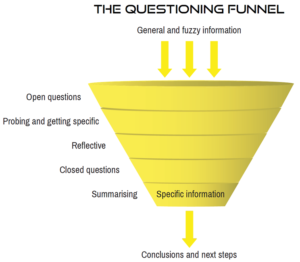
“We start with a questioning funnel using open questions, which is really important because we’re aiming to learn ‘what’s on your mind?’.  

Questions for active listening

People will then start to tell us things, (and there’s a whole process around that which I think is another conversation), but an important part of getting the solution right is getting the requirement right. While that’s not so difficult, there’s a level of sophistication and expertise needed to elicit that accurately. Very often, one individual doesn’t know what all of the requirement actually is, or has a view that not everybody shares. So we look at how to come to a collective consensus that fits everybody.”

Nina says “I would add ‘listen to understand’. Because, as well as asking probing questions, it’s about asking enough questions. So, the client might think it’s a surface problem, ‘oh, I just need to fix this problem,’ but the skill is in digging deeper to really understand what the problem is and what’s causing what they think is the issue.”

“And I would add one more thing” says Heather. “Obviously, it’s important to have robustness and rigour, but also to be flexible. Sometimes we find that we’ve done all our wonderful robustness and rigour and then after maybe the second session, new things emerge. It is about being observant and staying curious. The solution can invariably change, because change happens so quickly in an organisation that we have to be flexible and adaptable as part of that process as well.” 

“I think it’s actually really good and healthy to say, ‘this will change, let’s not set it in stone,” says Bradley. “Because ultimately things will change as we go through the programmes and interventions. That’s been my experience – it never stays the same, ever.”


What other considerations do you come across?

“Time is often an issue,” says Bradley. “People are really busy, but it’s important for us to refine the requirement and complete the initial piece of work so that we can start the development and intervention delivery. But clients have their day jobs and priorities to manage. So encouraging people to carve out the time for what we need can be a challenge. And sometimes their expectation around the time needed to develop and then deliver a programme is unrealistic. Because it’s our professional world, we’re very aware of how tight time already is. But when people aren’t giving us what we need internally to get going, that can cause difficulties.”

How do you select the theories and methodologies that will suit the client, issue and desired solution?

“That’s a question for Heather,” says Bradley, “because she done some good work around this, and people have really enjoyed what she’s selected and delivered.”

“It is handy to have a background in learning development, as well as being a consultant,” Heather replies, “because there is a process, and having that core basic knowledge of what actually helps people make behavioural change is really important. That toolkit, plus lived experience and wisdom, is the foundation piece.

The next piece is using the analysis. Then we bring our lived experience and wisdom into the client’s world and find the sweet spot. Next we offer ideas based on considerations they’ve told us around time, budget, global reach, etc. Then, at the simplest level, we provide one to three options.”

“One thing I’d add to that, “says Nina, “is that we start with the end in mind. Once we know what we’re aiming for, that will inform our approach. So for instance, if you were a global company and it wasn’t possible to get everyone together, we might need to incorporate more e-learning, and videos. And we would have to think about the different elements and steps in the journey to decide which would deliver the best outcome.”

Bradley agrees: “Yes, and I’d reiterate the importance of having that background and experience. There are certain business models and concepts that just tend to work for the majority and resonate strongly for participants. More specifically, there are a number of models that I have experienced people’s reaction to many times around leadership, or change, or whatever the subject is. This is a great help too.”

“I’d say working in partnership with the client is also incredibly important,” says Heather. “So you’re not seen as some sort of bolt-on outsiders. It’s about working with them, engaging them every step of the process, so they understand the content and are living and breathing it, and they get a sense of what you’re doing.”

“They generally have other things going on in the business,” continued Bradley “and might already be applying a certain methodology. For example, at the moment I’m working with a company who are talking about ‘finding more zebras’. A zebra being your ideal client, because they look like a zebra. So if they were using that sort of terminology, that would probably influence how we come in off the back of that.”

What happens if an organisation is already applying a methodology, but you don’t think it will deliver the right outcome?

“That does come up!” says Bradley. “If a client is utilising something already, we can of course incorporate that if they want us to. We wouldn’t presume that we know better than the client about their own business. So we certainly incorporate what is being used but we will also bring new light to any given situation including new materials and insights.”

“We would also ask questions to understand their reasoning, and how we might add value to the broader solution,” adds Nina.

“We might ask them to tell us about some success they have had with it’,” adds Heather. “And then try to build on that success.”

How do MatchFit measure the effectiveness of the programme?

Bradley explains: “Measurement is essential for us at MatchFit, and we do it on four levels, five if the client allows:

  1. Reaction – How do people respond to what we’re doing? Are they finding it valuable? Are they enjoying it?
  2. Learning – What new insights are they gaining by taking part?
  3. Behaviour – What are they changing, what have they done differently based on those insights?
  4. Impact – Having done something differently, what is the result of that changed behaviour?

And then the fifth level, if they can share the information, is ‘What is the monetary value of that change? What has actually been saved, or made financially?

For example, one client has saved over £120,000 pounds on average for each unit the intervention was rolled out in, because the leadership really engaged in the programmes and learned not only that it was important to manage things differently, but how to do so.

We’ve earned so much credibility with clients by being able to measure outcomes. There’s a lot of learning and development that people go on that isn’t measured at all, and I honestly believe that’s a waste of budget.”

What is MatchFit’s top tips for designing a really great programme?

  • You don’t get a degree in one day. So invest in programmes not training days.
  • Support people in committing the time for their development.
  • Make sure your consultant communicates well, is open to different ideas and asks sufficient questions to really understand the problem. Are they really listening?
  • The best interventions have reflection time built in. People are so busy, and have such a lot going on, they need to have time to sit quietly with the content and look at it to build results.
  • Does the programme include wellbeing support? Learning and doing new things creates stress (positive stress) in the body, so wellness support woven in helps people bring their very best self all the way through.
  • Does the programme have plenty of interaction? Does it get people involved in what they are learning so that they can practice the skills?
  • How will it be measured?

Bradley concludes, “It’s really important to MatchFit that we work in partnership with a client and get to know the senior team, because we’re there to facilitate positive change. We’re not just flying in and flying out to supply a service. We need to engage the senior leadership team, because even if they’re not coming on the intervention, they need to be aware of what the intervention involves. When we step away, they’re the people who are going to continue embedding those new skills and behaviours. That’s how we set them up for success.”

To learn more about the MatchFit CLIMB interventions, please visit the website https://matchfitclimb.com/climb-interventions/

If you’d like to learn more about our MatchFit programmes, take a look at our information pages here, or why not get in touch? enquiries@matchfitwith.com or call +44 (0) 7858 775 249

Bridging the Gap – A Conversation about Designing Interventions Read More »