MatchFit Methodology

Tells people about Flexible Working Day on 21st June and what organisations need to do to make it work successfully.

Flexible Working is Here to Stay. The Challenge is Making it Work.

Bradley Honnor, Managing Director of MatchFit, explores what organisations need to do to make flexible working successful for both people and business performance.

For many people, flexible working isn’t a perk. It’s what makes work possible. It enables working parents to balance family responsibilities, supports carers looking after loved ones, helps people with disabilities or neurodiversity thrive, and allows organisations to retain experienced talent who might otherwise leave the workforce.

The numbers speak for themselves.

  • Around 600 people leave work every day in the UK to care for loved ones.
  • 85% of mothers leave full-time work within three years of having children.
  • Around 1.1 million employees have left a job in the last year due to a lack of flexible working opportunities.

Flexible working removes barriers and opens doors.

It’s also become one of the most important factors in attracting and retaining talent. Recent research from MacMillan Davies found that 87% of employees viewed flexible and hybrid working as the most effective benefit for retention, ahead of salary, career progression and childcare support.

The message is clear: organisations that want to attract and retain the best people need to offer flexibility.

But while flexible working brings significant benefits, it also creates new challenges.

The Culture Challenge

According to the CIPD, today, around three-quarters of organisations operate some form of flexible/hybrid working.

Employees consistently report positive outcomes, including:

  • Better work-life balance
  • Improved wellbeing
  • Greater autonomy
  • Increased productivity

Yet many organisations are discovering that flexibility can come at a cost if it isn’t managed effectively. CIPD research shows employers are most concerned about:

  • Managers’ ability to lead teams effectively
  • Employee connection to organisational purpose
  • Collaboration and creativity
  • Maintaining organisational culture

Experience tells me that these challenges aren’t caused by flexible working itself. They’re caused when organisations try to operate with new ways of working but old leadership habits.

 Why Culture Matters More Than Location

A strong culture isn’t created by being in the same building. It’s created through shared purpose, trust, communication and consistent behaviours.

Without deliberate effort, hybrid or part-time working can create:

  • Silos between teams
  • Reduced collaboration
  • Communication gaps
  • Lower levels of trust
  • A weaker sense of belonging

Over time, people can become disconnected from the organisation’s purpose and from each other. Performance and wellbeing often suffer as a result.

A strong culture requires deliberate leadership, clear behaviours and a shared sense of purpose. As we explore in our article on building high-performance cultures, organisations that succeed create the conditions for people to perform, collaborate and thrive—regardless of where they work.

 What Organisations Need to Do

The most successful organisations don’t leave culture to chance. We recommend you focus on three areas.

  1. Help Managers Lead Differently

Managing a hybrid team requires different skills and leaders need to be equipped to:

  • Build trust remotely
  • Communicate with clarity
  • Manage performance fairly
  • Support wellbeing
  • Create opportunities for development and progression

The organisations that succeed are those that invest in leadership capability, not just technology.

  1. Create Stronger Connections to Purpose

When people are not physically together every day, organisations need to work harder to connect employees to the bigger picture.

People need to understand:

  • Why their work matters
  • How they contribute
  • What the organisation stands for

Purpose creates alignment, engagement and commitment, regardless of location.

  1. Build Intentional Team Cultures

Culture no longer happens by accident. Organisations need to create opportunities for meaningful connection, collaboration and shared learning.

This means being intentional about:

  • Team communication
  • Relationship building
  • Knowledge sharing
  • Recognition
  • Collective accountability

The strongest cultures are built through everyday interactions, not occasional events.

It’s also important to provide training to managers on how to manage flexible and hybrid teams effectively and fairly. This means giving support around performance management, remote communication, collaboration and relationship-building, and employee development and progression.

Supporting Flexible Working Successfully

The organisations that make flexible working successful don’t focus solely on policies or technology. They focus on helping leaders:

  • Create clarity and trust
  • Strengthen communication
  • Build psychological safety
  • Improve collaboration
  • Align people around a shared purpose

The challenge is creating a culture where people can perform, connect and thrive whenever and wherever they work.

Through our CLIMB to Align programme, the team at MatchFit help organisations build high-performance cultures that work in the reality of today’s workplace, focusing the behaviours, relationships and team dynamics that drive both performance and wellbeing.

Final Thought

Flexible working is no longer a temporary response to changing circumstances. It is a permanent feature of modern working life.

When flexibility is supported by strong leadership, clear communication and a shared sense of purpose, everyone benefits:

  • Employees gain greater balance and opportunity.
  • Organisations gain stronger engagement, better retention and access to a broader and more diverse talent pool.

The organisations that will thrive are those that learn how to lead, connect and build culture differently.

Sources:

CIPD Report 2025 8909-flexible-working-report-web.pdf

Find out more information about the author, Bradley Honnor, MatchFit’s Managing Director

https://matchfitclimb.com/bradleyhonnor/

Contact bradley@matchfitclimb.com if you would like to know more about how our programmes can help improve workplace stress and develop a high-performance culture in your organisation.

If you’d like to learn more about our MatchFit leadership programmes, take a look at our information pages here, or why not get in touch? enquiries@matchfitclimb.com

Flexible Working is Here to Stay. The Challenge is Making it Work. Read More »

Tells the reader MatchFit has been shortlisted for the CIPD People Management Awards 2026

MatchFit has been shortlisted as a finalist in the CIPD People Management Awards 2026

We’re excited to share that MatchFit has been shortlisted as a finalist in the CIPD People Management Awards 2026 in the category of Best HR/L&D & OD Supplier.

This recognition reflects our ongoing partnership with HH Global, where over the past two years, we’ve delivered Pathfinders – a successful international Leadership Development Programme that has evolved further into a powerful, and innovative three-way collaboration between MatchFit, HH Global, and their clients.

Through our CLIMB to Align Programme, leaders and teams have become more strategically aligned, improved collaboration and service delivery, and unlocked new growth opportunities—creating measurable impact across both HH Global and their customers.

A standout example has been the co-creation of a new HH Global/CCEP (Coca-Cola) operating model, developed through close collaboration between all partners and HR/OD teams.

Our MD Bradley Honnor shared:

“This work shows what’s possible when we move beyond supplier relationships and build truly aligned partnerships that create shared value and real business impact.”

Thank you to everyone involved, we’re proud of what we’ve built together.

More to come—but for now, we’re celebrating the shortlist!


Find out more information about the author, Bradley Honnor, MatchFit’s Managing Director

https://matchfitclimb.com/bradleyhonnor/

Contact bradley@matchfitclimb.com if you would like to know more about how our programmes can help improve workplace stress and develop a high-performance culture in your organisation

If you’d like to learn more about our MatchFit leadership programmes, take a look at our information pages here, or why not get in touch? enquiries@matchfitclimb.com

MatchFit has been shortlisted as a finalist in the CIPD People Management Awards 2026 Read More »

If Your Culture Creates Stress, No Wellbeing Initiative Will Fix It

Bradley Honnor, Managing Director of MatchFit, explores why workplace stress continues to rise despite growing investment in wellbeing initiatives, arguing that the root cause is often culture, not just individuals.

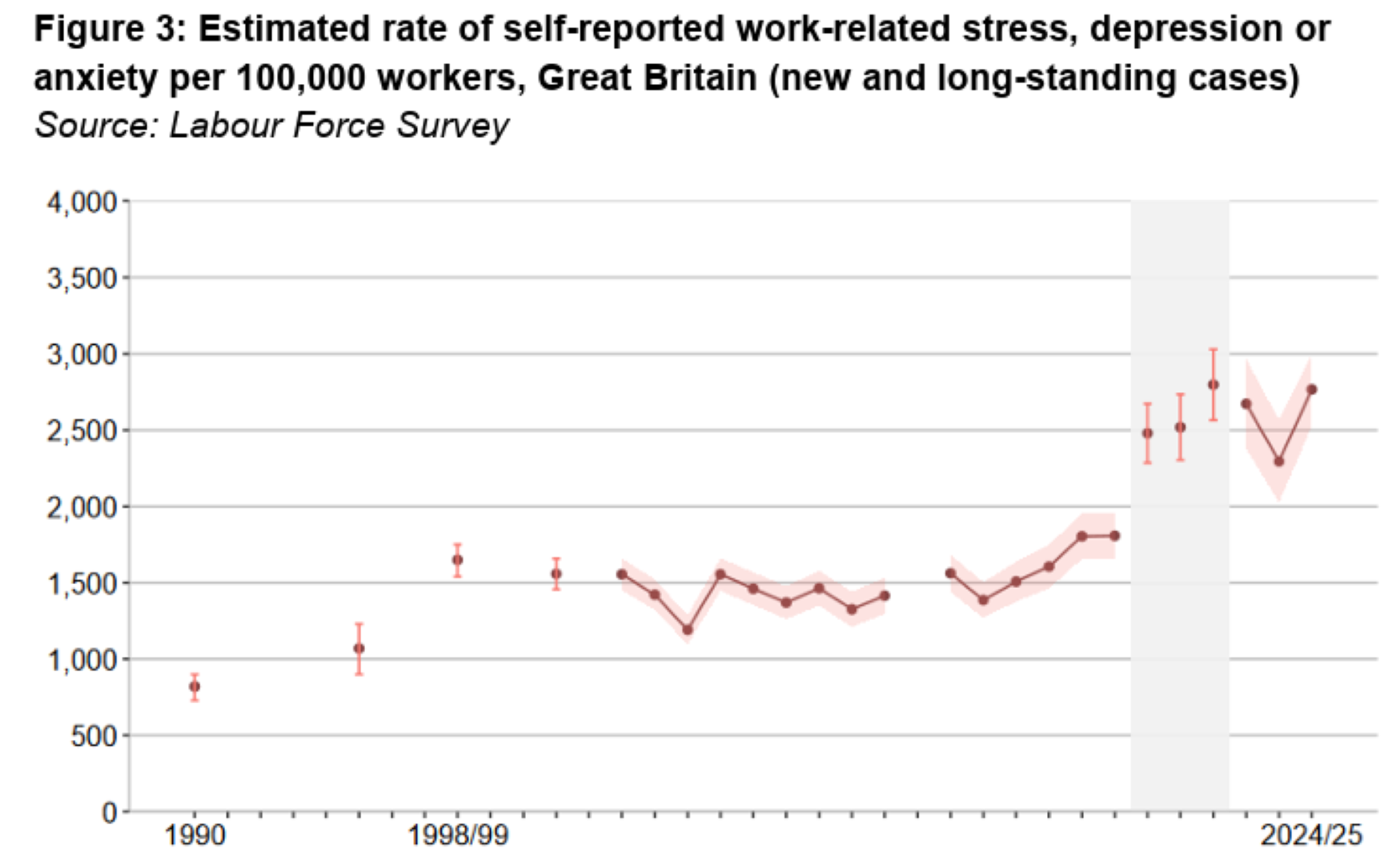
Workplace stress isn’t a small issue. It’s one of the biggest challenges facing organisations today. According to the Health & Safety Executive (HSE) in 2024/25, stress, depression and anxiety accounted for 22.1 million working days lost in the UK. On average, each person affected took 22.9 days off work.

At the same time, the Trade Union Council (TUC) reports that days lost to work-related ill health have increased by a third since 2010. For businesses, the cost is huge. Estimates suggest workplace stress, depression and anxiety cost UK organisations between £42 billion and £56 billion annually.

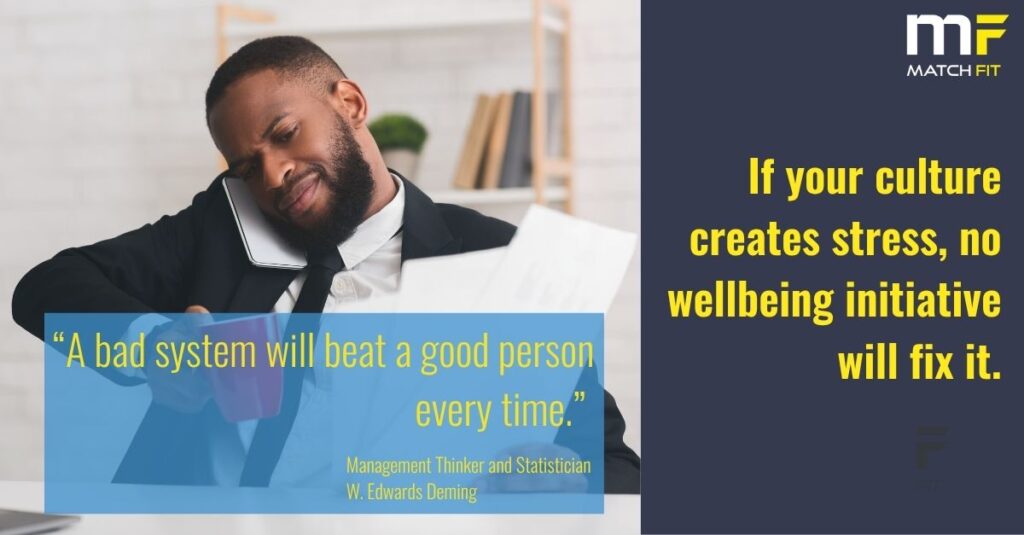
I’ve seen many organisations still trying to solve the problem with surface-level wellbeing initiatives, but the reality is simple: If your culture creates stress, no wellbeing initiative will fix it.

As management thinker and statistician W. Edwards Deming put it “A bad system will beat a good person every time.” In other words, if the environment people are working in is the problem, focusing only on the individual won’t solve it.

Let’s look at the real causes of workplace stress

Stress at work doesn’t appear out of nowhere. It’s usually driven by a combination of factors:

  • Excessive workload and unrealistic expectations
  • Poor or inconsistent management
  • Job insecurity and lack of clarity
  • Toxic environments, low trust and lack of recognition

All of these matter, but in practice, they often point back to one root cause: culture.

A stressful culture creates everything else. It drives poor management behaviours, increases uncertainty, and leads to burnout.

Why culture matters more than programmes

Many organisations invest in wellbeing programmes such as apps, workshops, benefits. These can help, but only at the edges.

If people are working in an environment where:

  • They don’t feel safe to speak up
  • Expectations are unclear or constantly shifting
  • Leaders don’t role model healthy behaviours,

then no initiative will offset that. Wellbeing is not a programme, it’s an outcome of how people experience work every day.

What needs to change

To reduce stress in a meaningful way, organisations need to address the root causes.

That means:

  • Understanding what’s really happening
    Identifying sources of pressure such as conflict, unrealistic demands or unclear priorities
  • Equipping leaders and managers
    Helping them create environments built on trust, clarity and open communication
  • Embedding behaviour change
    Making wellbeing part of how work gets done, not an add-on

As explored in our thinking on wellbeing and leadership, real change happens when leaders take responsibility for the environment they create—not just the results they deliver.

The growing pressure of AI and pace

This is a theme I see coming up more and more in conversations with people at every level of the organisation. Alongside existing pressures, the pace of change, particularly driven by AI, is adding another layer.

AI is accelerating how we work—but it’s not changing how we’re wired as humans.

This creates new risks:

  • Teams operating at or near cognitive overload
  • Constant pressure to move faster and do more
  • Changing expectations around productivity and availability
  • ‘Invisible burnout’ in high-performing individuals

Technology has always introduced stress and now AI is simply accelerating it.

I believe the organisations that succeed will recognise a simple truth—performance is not just about time; it is about energy. Leaders need to create clarity rather than noise and build team environments that support people to perform at their best and recover effectively.

Leadership is the difference

There is strong evidence that improving employment standards improves wellbeing, health and productivity. In fact, according to the TUC, 75% of managers believe strengthened employment rights would improve employee health. But policies alone aren’t enough.

Culture is shaped by leadership behaviours:

  • What gets rewarded
  • What gets ignored
  • How people are treated day to day

If leaders don’t create psychological safety, trust and clarity, stress will persist—regardless of any initiative.

#BeTheChange: where responsibility starts

2026 Stress Awareness Month’s theme, #BeTheChange, is a reminder that change doesn’t come from waiting, it comes from action.

We often wait for organisations, leaders or systems to improve. But meaningful change starts with individuals—through how we think, act and connect with others.

  • Our brains can adapt and rewire (neuroplasticity)
  • We have more control than we think (self-efficacy)
  • We perform better when we feel connected (relational wellbeing)

Culture is built through these everyday interactions.

A different approach to change

At MatchFit, our ‘Phenomenlogical approach’ focuses on the lived experience of individuals and teams and is grounded in understanding that everyone experiences the same environment differently. Two people in the same team can have completely different experiences of stress, pressure and support.

That’s why real change comes from working in the ‘here and now’ and understanding behaviours, dynamics and perceptions as they happen.

By doing this, organisations can:

  • Shift how people see themselves and their capabilities
  • Improve communication and team dynamics
  • Build environments where people take ownership and responsibility
  • Create sustainable cultural change

Final thought

Wellbeing is not something you can bolt on. It’s created by the expectations you set, the behaviours you tolerate, and the environment leaders create every day.

If your culture creates stress, no wellbeing initiative will fix it. But if you get culture right, wellbeing follows.

Find out more information about the author, Bradley Honnor, MatchFit’s Managing Director

https://matchfitclimb.com/bradleyhonnor/

Contact bradley@matchfitclimb.com if you would like to know more about how our programmes can help improve workplace stress and develop a high-performance culture in your organisation.

If you’d like to learn more about our MatchFit leadership programmes, take a look at our information pages here, or why not get in touch? enquiries@matchfitclimb.com

If Your Culture Creates Stress, No Wellbeing Initiative Will Fix It Read More »

Represents how DEI meets culture for inclusion to work

When DEI Meets Culture: Where Inclusion Really Happens

Bradley Honnor, Managing Director of MatchFit, shares his perspective on whether culture is replacing DEI — or revealing where DEI, as it is often practised, has fallen short.

For me, the real question isn’t whether DEI matters — it’s whether our cultures are actually designed to make people feel included.

Introduction: Why This Question Is Being Asked Now

Over the last few years, Diversity, Equity and Inclusion (DEI) has rightly moved from the margins to the boardroom. For many organisations, it has become a moral imperative, a reputational issue, and a strategic priority. And that matters. The intention behind DEI — fairness, opportunity, belonging is important and necessary.

Yet at the same time, I increasingly hear a quiet question being asked behind closed doors: Is this actually working?

Not because people no longer care about inclusion, but because many organisations are struggling to translate good intentions into lived experience. There is fatigue. There is defensiveness. There is confusion about return on investment. And in some cases, there is a sense that DEI has become polarised, symbolic or disconnected from day-to-day reality.

Alongside this, another conversation has been gaining momentum — about culture. Culture is increasingly cited as the real driver of engagement, belonging and performance. Not what is written in policies or values statements, but how people actually experience work.

And this is where the real tension emerges.

Not whether DEI should exist — but whether culture is the missing link between DEI intent and DEI impact.

What DEI Was Meant to Achieve and Where It Struggled

At its core, DEI was designed to address inequality, underrepresentation and exclusion. It sought to give voice to those who had historically been marginalised and to create fairer access to opportunity. That intention remains valid.

However, in practice, many DEI initiatives have struggled because they have been treated as programmes rather than systems, often owned by HR rather than leadership, and frequently measured through metrics that don’t capture lived experience.

One of my longstanding concerns is that diversity and inclusion are often addressed in a way that unintentionally divides people into categories and boxes — gender, ethnicity, sexuality, age — and then asks those groups to speak about ‘their experience’.

The problem is that no group is homogeneous. A white, heterosexual woman will experience the workplace very differently from a disabled woman or a woman of colour. When we talk about ‘women’s experiences, who exactly are we talking about?

And just as importantly, when conversations are framed around groups, those outside the group can feel excluded from the discussion altogether. As a man, if we are talking about women’s experiences, I may feel I have nothing to contribute — even though inclusion is something we all participate in, every day.

When we move away from the individual experience and towards polarised group identities, conversations can quickly become defensive rather than curious. That is rarely the foundation for meaningful change.

DEI can set goals. But culture determines behaviour.

What Do We Really Mean by Organisational Culture?

Culture is often reduced to posters on walls, purpose statements and values decks. In reality, culture is much simpler and much harder.

Culture is how things really get done around here.

It shows up in everyday moments:

  • Who gets listened to in meetings
  • Whose ideas are challenged or dismissed
  • Who is trusted with opportunity
  • What behaviours are rewarded, ignored or quietly discouraged

Culture is not neutral. It either amplifies inclusion or undermines it.

From a psychological perspective, this matters because humans have a deep, innate need for belonging. We are social beings. We want to feel part of a group, a community, a ‘tribe’. When we feel excluded, even subtly, our nervous system responds with threat. Engagement drops. Creativity shuts down. People protect themselves.

Inclusion, therefore, is not just a moral concept. It is a human one.


Why Culture Is Where DEI Succeeds or Fails

Inclusion is not created by policies. It is created by behaviours.

I often reflect on how little we are taught about listening. In school, we learn to debate. We learn to defend a position. But we are rarely taught to listen openly — without preparing our response before the other person has finished speaking, without relating everything back to ourselves, and without judgement.

The psychologist Carl Rogers used principles such as unconditional positive regard in conflict mediation, even between deeply opposed groups. His work showed that when people feel genuinely heard and understood, polarisation softens and new understanding becomes possible.

This is deeply relevant to organisations today. When people do not feel listened to or psychologically safe, trust erodes — and without trust, inclusion cannot exist. The Edelman Trust Barometer 2025 highlights a growing trust gap between leaders and employees, with clear implications for engagement, retention and performance. I explore this in more depth, along with practical steps leaders can take, in my latest blog on closing the trust gap.

If leaders cannot create environments where people feel safe to speak, to disagree, to be different — then no amount of DEI policy will create inclusion. Culture is where intent becomes reality.

From Representation to Experience

Much of the DEI conversation has focused on representation — who is in the room. Representation matters. But it is only the starting point.

The more important question is: what does it feel like to be in the room?

Belonging, trust and fairness are not abstract ideas. They are experiences. And when people don’t experience them, they leave, quietly or otherwise.

One of the most honest measures of inclusion is not hiring, but retention. Diverse talent does not leave organisations because of a lack of policies. They leave because of culture.

There is also a tendency to frame inclusion from a deficit position: ‘How can we be more inclusive?’ That question subtly implies that we are failing.

An alternative and more constructive approach is to ask:

  • Where does inclusion already work here?
  • When have people felt most valued?
  • What behaviours created that experience?

Culture change is often about amplifying what already works, not endlessly focusing on what doesn’t.

Leadership: Culture Is Not Neutral

Leaders shape culture whether they intend to or not. Every reaction, every decision, every silence sends a signal.

Leaders are often promoted for expertise, results or technical competence — not for their ability to create psychological safety or foster belonging. Yet those capabilities increasingly determine whether teams thrive or disengage.

Culture is not an HR initiative. It is a leadership capability.

Inclusion becomes sustainable only when leaders are accountable not just for what is achieved, but for how it is achieved and how people experience working with them.

A Practical Example: Age Diversity and Culture

Age diversity offers a useful lens for understanding why culture matters more than categorisation.

Today’s organisations often include employees in their 20s working alongside colleagues in their 60s and beyond. Each group brings different expectations, shaped by their social and technological context.

  • Baby boomers may value loyalty and hierarchy
  • Gen X independence and pragmatism
  • Millennial’s purpose and feedback
  • Gen Z inclusivity and rapid development

Trying to manage this through labels alone creates division. Culture, however, provides the unifying force.

A shared purpose —one that helps people see how their work contributes to something larger, transcends generational differences. When people understand why their work matters, they engage despite different personal expectations.

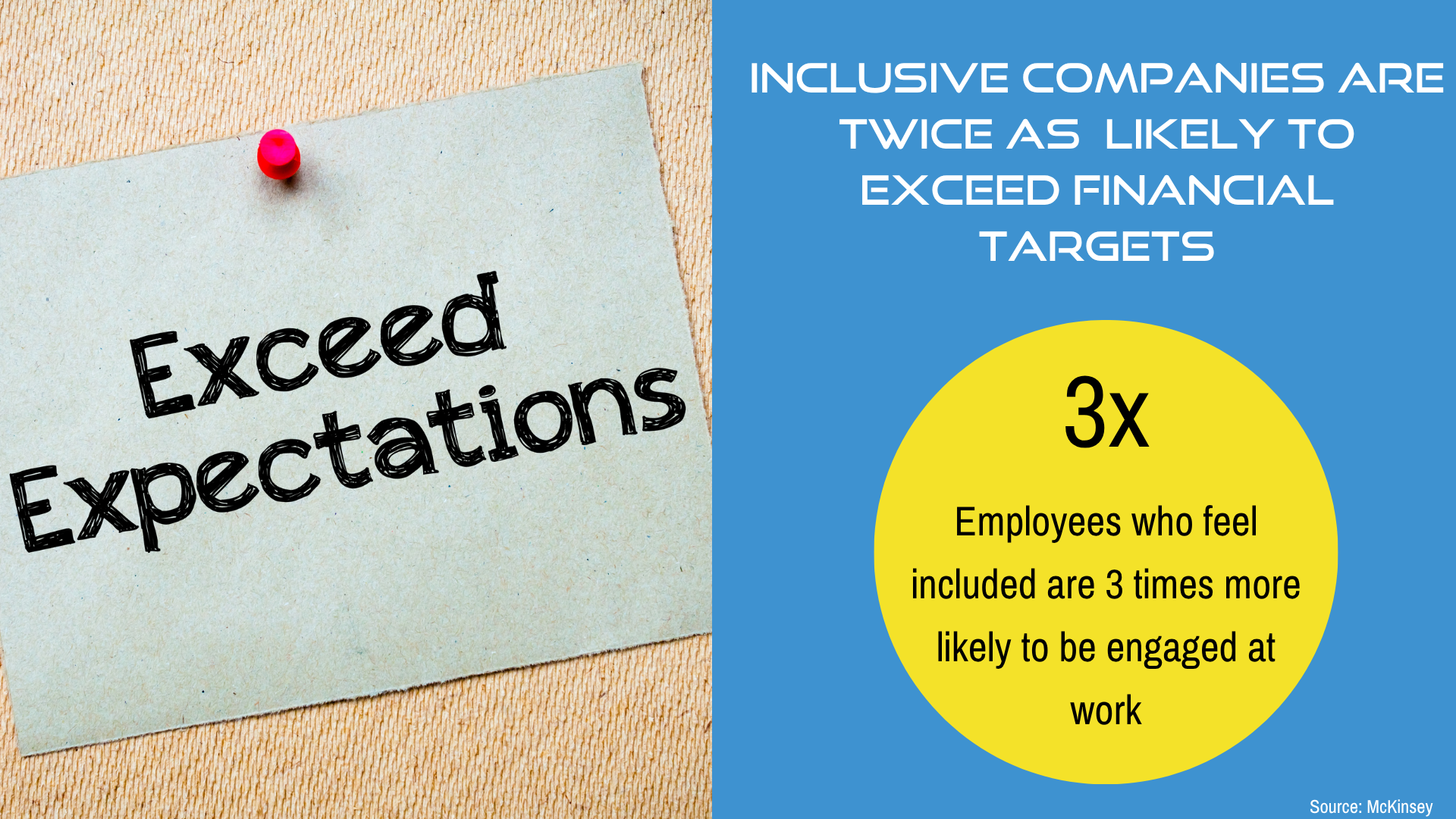
A growing body of research shows that organisations with strong, inclusive cultures deliver better business outcomes. Companies with diverse leadership teams are significantly more likely to deliver above-average profitability, while inclusive cultures have been linked to greater innovation, agility and better overall performance. Source: McKinsey insights

Is Culture Replacing DEI — or Completing It?

Culture is not a substitute for DEI frameworks, data or accountability. Representation still matters. Equity still matters. Measurement still matters.

But without culture, DEI becomes fragile. Transactional. Vulnerable to political shifts and fatigue.

The most effective organisations do not choose between DEI and culture. They integrate them:

  • DEI sets direction and accountability
  • Culture embeds behaviours
  • Leadership sustains both

Culture is not an escape from DEI. It is what makes DEI durable.

Conclusion: Culture as the Next Evolution of DEI

DEI is not going away. It is growing up.

If the first phase of DEI was about awareness and representation, the next phase is about experience and behaviour. About how inclusion is lived, not just stated.

Culture is where intent becomes impact. Where belonging becomes real. Where performance follows.

Organisations that focus on culture do not abandon DEI. They finally give it the conditions it needs to succeed — moving beyond initiatives to embed inclusive behaviours into leadership, decision-making and everyday interactions.

This is the focus of our MatchFit CLIMB Programme: supporting organisations to build sustainable, high-performing cultures by aligning leadership behaviour, trust and inclusion with real business outcomes. When culture is treated as a strategic capability rather than a side project, DEI stops being fragile — and starts driving lasting change.

Find out more information about the author, Bradley Honnor, MatchFit’s Managing Director

https://matchfitclimb.com/bradleyhonnor/

Contact bradley@matchfitclimb.com if you would like to know more about how our programmes can help manage successful leadership transitions within organisations.

If you’d like to learn more about our MatchFit leadership programmes, take a look at our information pages here, or why not get in touch? enquiries@matchfitclimb.com

When DEI Meets Culture: Where Inclusion Really Happens Read More »

When the CEO Leaves: The People Risk Most Organisations Underestimate

Bradley Honnor, Managing Director of MatchFit, shares his perspective on what really happens inside organisations when a CEO departs — and why the greatest risk is often not strategic, but human.

Across global politics, we’re witnessing what happens when long-standing leaders are removed or step aside in regions such as the Middle East and South America.

In each case, the immediate questions are strikingly similar:

Who now holds authority?
Is there a credible succession plan?
Will direction change?
Is the system stronger than the individual who led it?

Markets respond. Citizens react. Alliances recalibrate. Confidence shifts based on perceived stability.

The context is vastly different from corporate life, but the underlying dynamics are not.

When a CEO or Managing Director resigns, is removed, or steps down unexpectedly, organisations experience their own version of this shockwave. Governance processes are activated, the Board convenes and statements are drafted.

But inside the organisation, something else happens first. People react.

And that reaction — not the formal transition plan — will determine whether performance stabilises or slips.

The Psychological Shockwave

For employees, leadership departure is rarely interpreted as a neutral event.

The sort of questions I’ve seen surface quickly are:

  • Is the strategy changing?
  • Is my role secure?
  • Who really has authority now?
  • What aren’t we being told?

Uncertainty tends to shift energy away from performance and towards self-protection.
Decision-making often slows, informal narratives accelerate and discretionary effort declines.

If communication is delayed, the vacuum fills itself.

Therefore, for HR Directors, this is the critical window.

Executive Team Instability

At the senior level, the dynamics are different but equally fragile. Power recalibrates, alliances form and decision rights become ambiguous.

Without deliberate alignment, executive teams can fragment at precisely the moment cohesion is most needed.

From a CEO or interim leader perspective, the priorities are clear:

  • Establish authority without ego
  • Clarify decision-making structures
  • Align on 3–5 non-negotiable performance priorities
  • Maintain operational discipline

From a Board perspective, visibility and credibility matter most:

  • Demonstrate governance strength
  • Communicate clearly with investors and stakeholders
  • Signal continuity of purpose and values

But internally, the organisation is watching behaviour more than statements.

The Cultural Risk and Trust Factor

Globally, CEO departures have reached record levels, in 2025 — 21% above the 8-year average*. This trend underscores how common leadership transitions have become and why organisations must be prepared.

In my experience, leadership transitions often expose pre-existing fault lines.

If trust was fragile in the first place, it would weaken further.
If culture relied heavily on one individual, identity disruption will follow.
If succession planning was unclear, confidence tends to erode quickly.

At the centre of all of this sits one critical variable: trust.

When a CEO leaves, employees aren’t just questioning strategy — they are reassessing leadership credibility. In uncertain moments, trust determines whether people lean in or step back, collaborate or protect themselves, stay committed or quietly disengage.

Performance rarely drops because of strategy in these moments. It drops because clarity and confidence disappear. Transitions don’t create trust gaps; they reveal them. And where a gap already exists, disruption widens it.

We explore this dynamic further in our article on the widening trust gap between leaders and employees — and what organisations can do to close it.

The HR Director’s Critical Role

In the first 30–90 days, HR becomes the stabilising force between governance and culture. It’s important to focus on these key priorities:

  1. Controlling the Internal Narrative
  • Equip senior leaders with aligned messaging.
  • Encourage transparency where possible.
  • Acknowledge uncertainty without amplifying fear.
  1. Pulse the Organisation Early
  • Listen before assumptions harden.
  • Identify where anxiety is concentrated.
  • Track retention risk among high performers.
  1. Re-anchor Purpose and Behaviour
  • Reinforce what is not changing.
  • Make values visible in action.
  • Increase senior leadership presence across the organisation.
  1. Protect Performance Drivers
  • Support leaders to maintain focus on core metrics.
  • Clarify and reinforce the organisation’s strategic direction
  • Discourage unnecessary strategic pivots driven by emotion rather than evidence.

Managing the External View

Markets and shareholders assess three things during leadership transitions:

  1. Governance credibility
  2. Succession readiness
  3. Executive cohesion

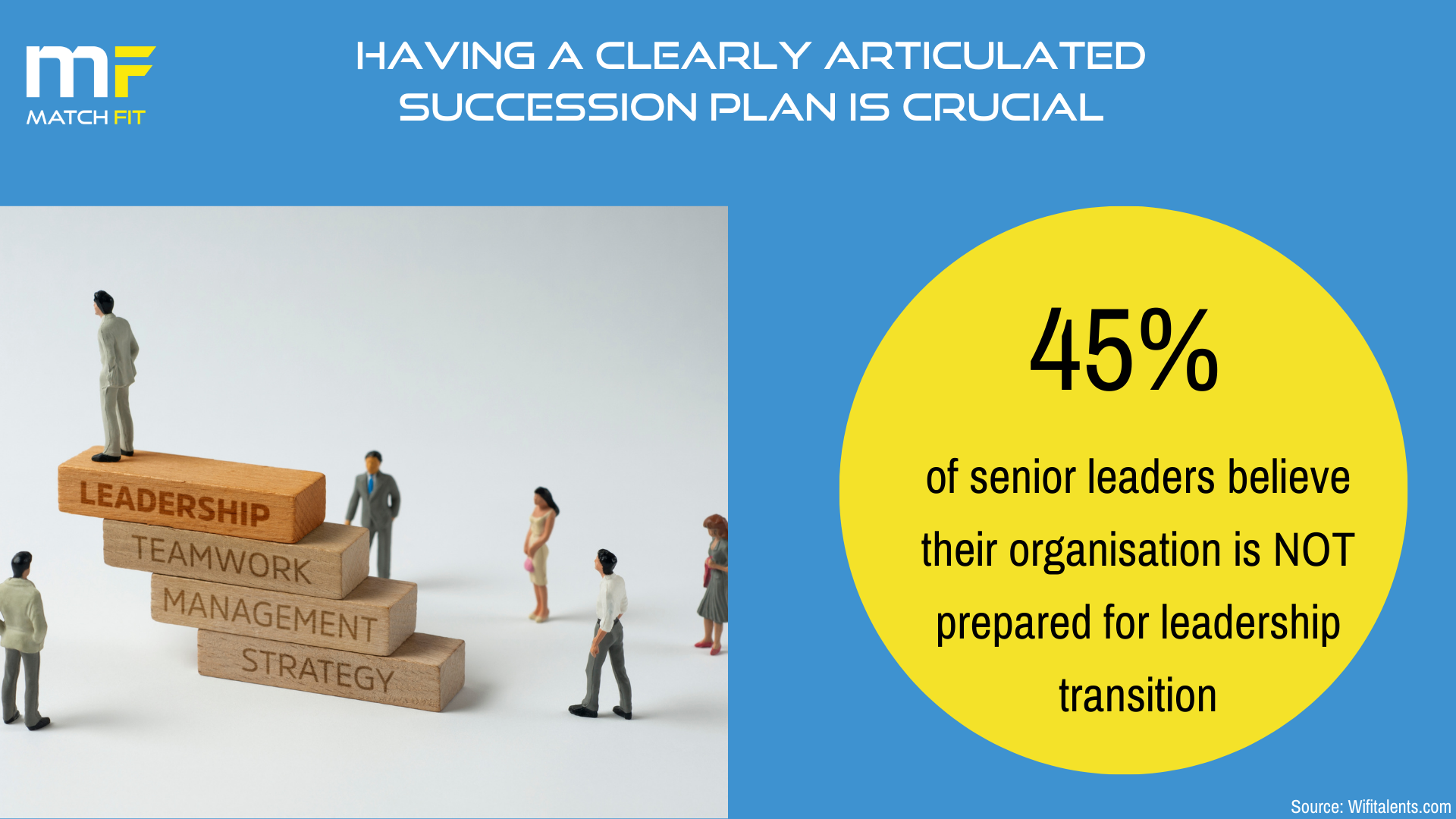
Succession readiness is often the silent vulnerability. Research suggests that around 45% of senior leaders believe their organisations are not prepared for leadership vacancies, while 70% identify leadership gaps as a barrier to growth**. 

<alt="shows that 45% business leaders think their organisation is not succession ready">

In this environment, the organisation’s narrative must move faster than speculation — and it must be supported by visible governance strength and a credible, clearly articulated succession plan.

The Opportunity Within Disruption

Handled poorly, leadership change leads to drift, talent flight and cultural fragmentation.

Handled well, it becomes a moment to:

  • Reset cultural expectations
  • Strengthen governance discipline
  • Clarify strategic focus
  • Reinforce collective leadership

The first 90 days determine the trajectory.

Final Thought

Leadership departure is not just a governance event, it’s a human event and we need to reframe it in this way.

Sustaining performance through transition requires more than process. It requires psychological stability, executive alignment and cultural clarity.

From my perspective, organisations that manage both the operational and emotional dimensions of change are the ones that emerge stronger not simply intact.

Building that level of resilience does not begin at the point of crisis. It is developed deliberately, by aligning leadership behaviour, strengthening trust and embedding cultural clarity across the organisation — the focus of our MatchFit CLIMB Programme.

Find out more information about the author, Bradley Honnor, MatchFit’s Managing Director

https://matchfitclimb.com/bradleyhonnor/

Sources:

*https://www.russellreynolds.com/en/insights/reports-surveys/global-ceo-turnover-index/what-todays-ceo-turnover-means-for-boards-and-succession?

**https://wifitalents.com/succession-planning-statistics/

Contact bradley@matchfitclimb.com if you would like to know more about how our programmes can help manage successful leadership transitions within organisations.

If you’d like to learn more about our MatchFit leadership programmes, take a look at our information pages here, or why not get in touch? enquiries@matchfitclimb.com

When the CEO Leaves: The People Risk Most Organisations Underestimate Read More »

The New Employment Rights Bill: Opportunities for Leaders, Teams and Performance

Bradley Honnor gives his view on how organisations can optimise the impact of the incoming legislation changes to drive performance at a leadership and team level.

The New Employment Rights Bill has now gained Royal Assent, marking one of the most significant shifts in the UK employment landscape in recent years. Much of the early discussion has focused on compliance such as updating policies, revising contracts and preparing for enforcement.

But for organisational leaders, the real opportunity lies beyond compliance. This Bill represents a cultural shift in how work is experienced day to day — particularly within teams, where employment rights are most visibly lived or broken.

For organisations that respond intentionally, the Bill can become a catalyst for stronger trust, clearer alignment and higher performance at every level.

What the Bill proposes – a brief overview

At its core, the Employment Rights Bill strengthens protections and formalises rights around fairness, security and voice at work. Key themes include:

  • Greater safeguards around dismissal and workplace fairness
  • Expanded rights related to flexible working and family leave
  • Stronger whistleblowing protections
  • Higher expectations of transparency and consistency in employment practices

While implementation will be phased, the direction of travel is clear: employees should feel respected, protected and treated consistently, not just contractually, but culturally.

What this means for organisational leaders and teams

Employment rights are rarely experienced at board level. They are felt within teams, through day-to-day leadership behaviours, decisions and conversations.

As rights become more visible and enforceable, team leaders sit at the intersection of policy and practice. How managers interpret, communicate and apply new rights will directly influence:

  • Trust within teams
  • Psychological safety
  • Engagement and retention
  • Performance under pressure

This reinforces a crucial truth: culture is not shaped by policy alone; it is shaped by people.

As employment rights expand, modern leadership must evolve from directive to empathetic, from control to clarity, aligning organisational values with a culture of fairness and psychological safety. Leaders and managers who model fairness, consistency and transparency create environments where teams feel safe to contribute, challenge and perform.

At the heart of this is alignment. Every team member needs to understand the organisation’s mission and values, what success looks like, and how their role contributes to it. Without this shared direction, even well-designed policies can result in confusion, frustration and disengagement.

Embedding compliance as culture; starting at team level

Organisations don’t need to wait for full implementation of the Employment Rights Bill to act. In fact, the most effective changes start with how leaders and teams work together today.

Team leaders are the daily translators of policy into behaviour. They sit at the point where organisational intent becomes lived reality. Investing in their capability, particularly in communication, decision-making and emotional intelligence is critical. Leaders need the confidence and skill to navigate sensitive conversations fairly, apply policies consistently, and model the behaviours the organisation expects others to follow.

Equip team leaders, not just HR

This is why compliance cannot sit solely with HR. When legal changes are treated as a technical exercise, they rarely influence culture. But when they are integrated into leadership development, performance conversations and everyday decision-making, they become part of how the organisation operates.

Embed rights into everyday team practices

Culture is reinforced through operational habits: how team meetings are run, how performance is discussed, how flexibility requests are handled, and how concerns are raised and addressed. Embedding change requires conversation, not broadcast. Creating a two-way dialogue within teams strengthens ownership and reduces resistance.

These everyday moments shape trust far more than policy documents ever could. When they consistently reflect fairness and clarity, compliance becomes embedded into culture rather than bolted on as an afterthought.

As employment rights expand, teams will closely observe how leaders respond. Organisations that use this moment to reinforce transparency, consistency and respect will see stronger alignment, higher engagement and more resilient performance.

As the saying goes: compliance shouldn’t be a tick-box. When legal protections are woven into organisational values and leadership behaviours, teams align more naturally and culture becomes a genuine competitive advantage.

At MatchFit, building high-performance cultures starts with a discovery phase. Through staff interviews, surveys and gap analyses, we identify the disconnects between leadership intent and team experience, ensuring interventions address real, lived challenges.

The future of flexible, secure work

The Bill also signals a decisive shift toward more flexible and secure ways of working. Provisions affecting zero-hours contracts, alongside strengthened parental and flexible working rights, reinforce the expectation that work should adapt to people, not the other way around. For leaders, this requires more than policy awareness; it demands judgement, consistency and trust at team level.

The workplaces of tomorrow will reward leaders who can balance commercial goals with genuine employee wellbeing and flexibility.

MatchFit helps organisations develop this balance through leadership and team interventions that bring clarity, accountability and care into everyday practice. When leaders are equipped to have better conversations and make fair, confident decisions, flexibility shifts from a concern to a genuine performance advantage.

Why this matters for organisational performance

High-performance cultures aren’t built through isolated initiatives or reactive compliance. They are built through consistent leadership behaviours that shape how people think, collaborate and perform.

Peer-reviewed research published via SSRN in 2023 The Role of Leadership in Organizational Development confirms that leaders act as “cultural architects”, shaping organisational values, norms and behaviours. When leaders at every level are aligned, teams become more adaptable, innovative and resilient.

MatchFit’s CLIMB programme  supports senior leaders in understanding how their communication patterns and leadership style influence teams. By linking self-awareness to real-time business challenges, leaders learn how to embed cultural change in a way that feels authentic and sustainable, cascading clarity and trust through teams.

The Employment Rights Bill reinforces what high-performing organisations already know: fairness, clarity and consistency are performance enablers. When teams trust their leaders and feel secure in how they are treated, engagement rises, alignment strengthens and results follow.

Looking ahead

 The organisations that will thrive in this new landscape are those that view the Bill not as a compliance burden, but as an opportunity to lead better at every level. Because when rights are embedded into leadership behaviour and team culture, performance doesn’t need to be forced. It emerges naturally, through trust, alignment and shared purpose.

If your organisation can integrate fairness, clarity and transparency into everyday practice, you’ll not only stay compliant but be able to outperform those that do not.

Contact bradley@matchfitclimb.com if you would like to know more about how our programmes can help embed trust within organisations.

If you’d like to learn more about our MatchFit leadership programmes, take a look at our information pages here, or why not get in touch? enquiries@matchfitclimb.com

The New Employment Rights Bill: Opportunities for Leaders, Teams and Performance Read More »

Continuous learning in leadership

Embedding a culture of continuous learning within leadership development

Continuous learning amongst leaders, leadership teams and workforces in general is vital for most organisations today. Leaders are expected to drive results, and to do this they must evolve continuously and manage changing daily and long-term challenges with good judgement and integrity. Building a culture that supports ongoing learning and development is essential not just for individual growth, but for organisational resilience and sustained performance.

This shift towards lifelong learning is being echoed globally. Employees of all generations and across diverse geographies are placing increasing value on opportunities to develop their skills and capabilities. For organisations looking to attract, engage and retain top talent, a strong learning culture is fast becoming a differentiator.

The case for continuous learning

According to research from the Centre for Creative Leadership, Leadership training programmes have been found to typically improve employee performance by 25-40% within the first year

This incredibly positive statistic can be improved further through a culture of continuous learning,which is about creating environments where curiosity is encouraged, development is prioritised and reflection is embedded into everyday practice. It involves moving away from static, event-based training programmes towards more integrated, agile approaches that keep pace with the changing needs of the business.

Leaders who model this behaviour—who actively seek feedback, reflect on their experiences and pursue new knowledge—set an important example for their teams. This kind of leadership provides psychological safety, encouraging others to step outside their comfort zones, experiment and grow. And with that, the business will grow too.

Learning-oriented leaders build teams that are more innovative, adaptable and aligned to the strategic direction of the business. Teams that display these characteristics are more likely to embrace change, address performance gaps proactively and contribute to a high-performance culture.

Making learning part of the system

For continuous learning to take root, it must be embedded into the fabric of the organisation. It shouldn’t just be a bolt on. This means aligning learning with business strategy and integrating it into daily workflows, leadership expectations and performance conversations.

Rather than treating learning as a separate HR initiative, organisations should weave it into how success is defined and measured. Leaders should be assessed not just on what they deliver, but on how they develop themselves and others. This creates a virtuous cycle where learning drives performance and performance drives further learning.

Development opportunities can take many forms—from structured programmes and coaching, to informal knowledge sharing, shadowing and on-the-job experiences. The key is to make these experiences relevant, accessible and meaningful.

At MatchFit our focus is on embedding learning through real-time business challenges, using tailored interventions that are practical, interactive and measurable. Programmes such as WeCLIMB Coach and CLIMB to Align are designed to encourage reflection, build capability and support leadership behaviours that create lasting cultural impact.

Unlocking leadership potential through reflection

A powerful way to deepen learning is through a phenomenological approach—an approach that invites leaders to examine their lived experiences, values, and internal drivers. By focusing on how leaders make sense of the world, rather than just what they do, this method promotes deep self-awareness and authenticity.

This level of introspection encourages leaders to move beyond technical competence and embrace the mindset shifts required for sustained change. When leaders understand their own patterns, motivations, and assumptions, they are better equipped to adapt their leadership style, communicate effectively, and respond to complexity with clarity.

Embedding this reflective practice within leadership development helps organisations build a pipeline of leaders who are not only skilled but also emotionally intelligent, self-aware and purpose-driven.

Creating a learning culture that lasts

Building a learning culture isn’t about launching a series of training events—it’s about reshaping mindsets, behaviours and systems to make learning an integral part of organisational life. This requires consistent commitment from the top and a shared belief in the value of growth and development.

A few practical ways to support this include:

  • Regular knowledge-sharing sessions – that encourage curiosity and innovation.
  • Performance reviews – that include learning objectives and track developmental progress.
  • Team discussions – that explore lessons learned from projects and decisions, and encourage open feedback.
  • Visible senior leader participation – in development activities.

Most importantly, learning must be linked to real outcomes. It must ensure that development is not just monitored, but that it delivers measurable impact—from increased self-awareness to observable behavioural change and improved business results.

When learning becomes part of how the business thinks, acts and grows, performance and engagement naturally follow. And that is the hallmark of a truly high-performance culture.


If you’d like to learn more about our MatchFit leadership programmes, take a look at our information pages here, or why not get in touch? enquiries@matchfitclimb.com

Embedding a culture of continuous learning within leadership development Read More »

Shape your future around your aspirations

Welcome to the final in a series of articles based on a recent OxTalks podcast in which Chris Oxley (Managing Director, Oxley & Partners) and Bradley Honnor (MatchFit Managing Director) discuss leadership and development training.

In this sixth episode, Chris and Bradley discuss the analogy of campers and climbers and the need for both in successful organisations. To conclude they discuss how to take control of your future and make your dreams become reality.


Chris: Moving onto something we’ve spoken about on this podcast before, which I thought was super unique, was your analogy about campers and climbers. Could you explain what that is?

Bradely: Of course. Campers are individuals, individuals who tend to reach a certain point of comfort or success, and they camp there. They’re not pushing for more or the next thing. Climbers are the opposite almost, in that they are looking constantly to strive for the next thing, for improvement, for personal growth, for the next challenge. They’re motivated by more, becoming more or doing better. What’s interesting is that sometimes it’s easy to assume that we might position one as more important than the other. But that’s not the case. We need campers and we need climbers. And they’re both very, very important to our business. We need people whose sense of purpose is to do a fantastic job in what they’re doing. They get take pleasure in the detail and getting it right and doing it on time and understanding it inside out. And that is their sense of purpose. But at the same time, we need people to want to grow and develop and move on to the next step. So it’s again an analogy that people can really relate to. And we can be at different stages of our lives, whether we’re camping or climbing, and we may camp outside work, but in work, we’re a climber. So it’s just an analogy. It’s not a perfect science, but it does resonate with people, and leaders really understand those within their own teams when they look for it through that lens.

Chris: Because you need both right, campus and climbers.

Bradley: Yes, and it’s really important because it’s easy to think that we need everybody to be a climber. But not everybody can be the MD. Not everybody can be on the leadership team. So we really do need people that are very content to work where they are and to perfect where they are. And you often find that a lot of campers really are motivated by mastery. So I may be in the same job for 15 years, but it doesn’t mean I don’t get better at it, and that I don’t make it easier for the people that rely on me to do my job. Camping isn’t just about sitting still. It’s just not so much about climbing. You can be very busy camping, right? You can be on pace camping. You can be doing lots of stuff that’s very fundamental and important. So it’s good to be clear about that, because in our training sessions years ago, I can remember people feeling that if they were camping they weren’t as important, or that they were doing something wrong. And that really isn’t the case. They’re both very important roles, and I would advocate having both types of people in the same team and business.

Chris: I certainly know that, in terms of the type of search I’m quite often involved with, when we have conversations or initial assessments with the client we don’t want somebody to move out of this role too quick. It’s that retention consideration – finding someone who can come in and embed into the role for quite a bit of time. So whilst it’s great that somebody’s got all that drive and they want to improve, they still need to do and have an interest in the job they’re doing today and make themselves amazing at it.

So just coming to the end of the podcast, I’d like to grab your insights around recipe for success. From your experience, what does the recipe for success look like? And are there specific elements or traits that consistently lead to success in people and organisations?

Bradley: I give that question a lot of thought. I’m fortunate to work around people where we’re discussing this a great deal. It all starts from mindset. There’s no doubt about that in my mind whatsoever. You need a positive, strong mindset, because everything stems from that. Whether it’s the direction you take or the confidence you have in yourself, or the belief you have in what you’re doing, or the actions you take. It’s very much around your mindset. If we didn’t think something was possible, we wouldn’t even begin. So that, for me, is the fundamental under pinner. What I also see in really successful people is that they have an innate capability to see the opportunity. It’s really quite interesting to be in a room with three sales people and two of them don’t see a bigger picture and wider opportunity, but one does. It’s the same conversation, but that successful salesperson is the one that is able to see that there’s a bigger picture here, and maybe the opportunity is wider than we first thought. So seeing or creating that opportunity is the second thing for me. And thirdly, people skills. And that’s a broad-brush term, but however good we are, we can’t grow a business on our own. We need people to believe in us and get on board with the plan and contribute to the plan and engage with the delivery. And people that are successful generally have a really good, strong capability of that people management piece, or at least people around them that pick that up on their behalf. So for me, they’re the fundamentals of success. If you want to recipe those three things, it’s mindset, seeing the opportunity and delivering that opportunity through people.

Chris: Finally, if there’s one key takeaway or message you’d want listeners to walk away with, what would that be?

Bradley: That’s a good question. I think it’s about not being defined. Don’t be defined by your perceived limitations. Shape your future on your aspirations. Aspirations can be a dream. Turn your dreams into goals. Turn your dreams into targets. Dream big and chase it.


We hope that you enjoyed this conversation. You can listen to the whole conversation here The Transformative Impact of Personalised Development with Bradley Honnor

If you’d like to learn more about our MatchFit leadership programmes, take a look at our information pages here, or why not get in touch? enquiries@matchfitclimb.com

Shape your future around your aspirations Read More »

Goals-Decision Making-Collaboration-Avoiding Paralysis

Welcome to the fifth in a series of articles based on a recent OxTalks podcast in which Chris Oxley (Managing Director, Oxley & Partners) and Bradley Honnor (MatchFit Managing Director) discuss leadership and development training.

In this fifth episode, Chris and Bradley discuss the importance of clear goals, decision making and some of the pitfalls to avoid. In organisations with high performance culture activities are clearly linked to the company vision, and decisions are made at the right level – quickly.


Bradley: One of the things I often say to a leader is: if you were to walk around the office at any given moment in time, and freeze time, and you looked over your shoulder at your people and what they were doing, would you be able to associate what they were working on in that moment to the overall vision or objective of that team or organisation? Or are they lost in auto pilot, responding to emails and working on what’s coming up rather than really understanding the reason they are doing that particular thing right now is because it feeds into another thing that will ultimately achieve our vision or goals. And if you have a whole team that are always operating on that understanding of why they’re doing what they’re doing, you have a massively powerful machine. If you don’t have that, you’ve got a bunch of headless chickens running around doing lots of stuff, maybe being  efficient, but not very effective. And there’s a big difference in those two things.

Chris: That leads me on quite nicely, actually, because I remember you talking about the worst decision being indecision. I was just wondering if you might be able to explain why that is so detrimental, especially within a leadership role.

Bradely: Indecision leaves you where you are right now. So you might be oscillating between what do I do? Do I do this? Do I do that? But what I’ve really learnt over the last few years working with some very senior people is that decisions generally are time sensitive. And there are lots of expressions, aren’t there, like: strike while the iron’s hot or make hay while the sun shines. There are lots of sayings that support ‘carpe diem’. Carpe Diem isn’t about seizing tomorrow or seizing next week, it’s seize the day today. So Indecision creates a risk in that, by the time your decision is made, it’s irrelevant, the opportunity is gone, the iron is now warm, and there is no point striking with that. You’ve missed the opportunity. I’ve found, for example, that in an organisation I’m working with at the moment, their decision-making process is quite slow. So what actually happens is, by the time an individual gets that decision off of a leader, they’re in a position where their client has moved on or got it done by somebody else or doesn’t need it anymore. So that’s why indecision creates a paralysis and loss of opportunity. Leadership is about being decisive, not foolhardy, not knee jerk reactions, but making the decision and seeing where that takes us and dealing with the new reality and probably the next decision following that. So that, for me, that’s the key reason. It’s something that is a time sensitive thing, something that you don’t have forever.

Chris: What strategies can people use to overcome indecision effectively within that leadership space? Is there anything quite simple, quite basic that they could look at.

Bradely: This comes up a lot. Sometimes that decision doesn’t need to be your decision. Trust the people that work for you as a leader. If you’ve got a head of client resources, let person make the decisions about client resources. Especially because sometimes that comes up to you as a board member, and operationally, you don’t understand the client or the dynamics or the culture as well as the individual running that area. So making sure we’re making the decisions that we need to make, and not the decisions that other people could be making is one thing. And that’s not an opinion. That’s something I see coming through in lots of businesses. I’m pretty sure that people listening will be aware of that dynamic, where things get escalated to a higher degree possibly than they need. And if there was more trust in the individuals in those positions, I think decision making would be quicker for sure. I think we need to think about how much we collaborate when we make a decision. We often see collaboration to the point of paralysis. We think to involve people, which is important, but also we need to understand what we are leading personally and what our scope for decision making is, and make that decision as a leader. So collaboration is good, but we’re seeing lots of decisions made by committee, and that’s slowing things down enormously. And I think lastly, be bold. Believe you can deal with the outcome. If it’s not the perfect decision or perfect solution, believe you can get the outcome that you’re looking for. So we see those three things happen an awful lot.

Chris: I love the collaboration to the point of paralysis comment. I’ll definitely steal that! But again, it falls back into what you’ve said before. We’ve moved back a little bit again, into that point that you made around everybody has their part to play. And I guess that feeds into letting people do their jobs, right? Have that trust in them. Let them play their role. Seems like a lot of the time there’s a lack in trust in individuals and that can really slow up a business and make things quite clunky. So that’s a super-useful thank you for sharing that.


We hope that you enjoyed this conversation and remember look out for Episode 6 soon. You can listen to the whole conversation here The Transformative Impact of Personalised Development with Bradley Honnor


If you’d like to learn more about our MatchFit leadership programmes, take a look at our information pages here, or why not get in touch? enquiries@matchfitclimb.com

Goals-Decision Making-Collaboration-Avoiding Paralysis Read More »