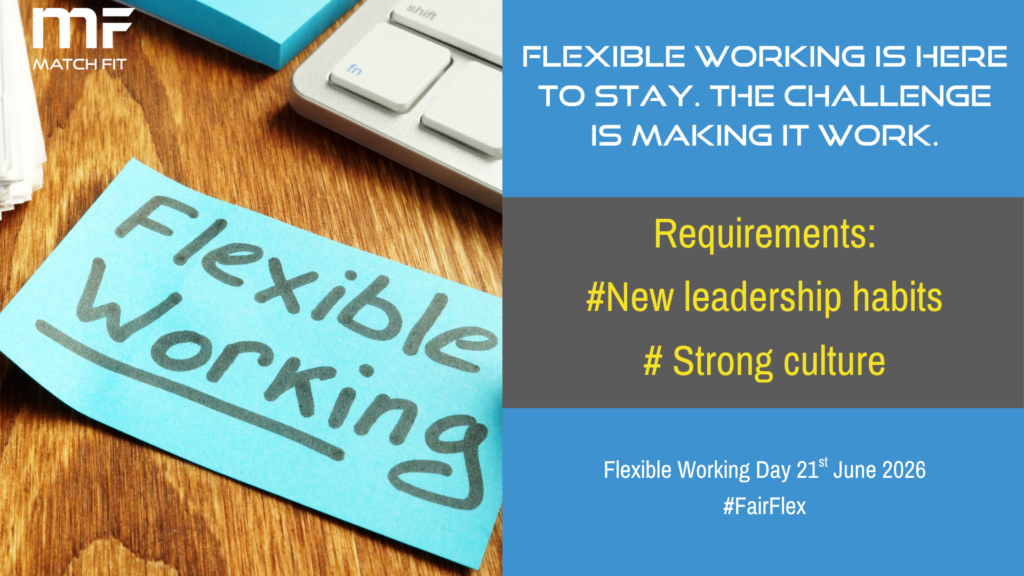
Flexible Working is Here to Stay. The Challenge is Making it Work.
Bradley Honnor, Managing Director of MatchFit, explores what organisations need to do to make flexible working successful for both people and business performance.
For many people, flexible working isn’t a perk. It’s what makes work possible. It enables working parents to balance family responsibilities, supports carers looking after loved ones, helps people with disabilities or neurodiversity thrive, and allows organisations to retain experienced talent who might otherwise leave the workforce.
The numbers speak for themselves.
- Around 600 people leave work every day in the UK to care for loved ones.
- 85% of mothers leave full-time work within three years of having children.
- Around 1.1 million employees have left a job in the last year due to a lack of flexible working opportunities.
Flexible working removes barriers and opens doors.
It’s also become one of the most important factors in attracting and retaining talent. Recent research from MacMillan Davies found that 87% of employees viewed flexible and hybrid working as the most effective benefit for retention, ahead of salary, career progression and childcare support.
The message is clear: organisations that want to attract and retain the best people need to offer flexibility.
But while flexible working brings significant benefits, it also creates new challenges.
The Culture Challenge
According to the CIPD, today, around three-quarters of organisations operate some form of flexible/hybrid working.
Employees consistently report positive outcomes, including:
- Better work-life balance
- Improved wellbeing
- Greater autonomy
- Increased productivity
Yet many organisations are discovering that flexibility can come at a cost if it isn’t managed effectively. CIPD research shows employers are most concerned about:
- Managers’ ability to lead teams effectively
- Employee connection to organisational purpose
- Collaboration and creativity
- Maintaining organisational culture
Experience tells me that these challenges aren’t caused by flexible working itself. They’re caused when organisations try to operate with new ways of working but old leadership habits.
Why Culture Matters More Than Location
A strong culture isn’t created by being in the same building. It’s created through shared purpose, trust, communication and consistent behaviours.
Without deliberate effort, hybrid or part-time working can create:
- Silos between teams
- Reduced collaboration
- Communication gaps
- Lower levels of trust
- A weaker sense of belonging
Over time, people can become disconnected from the organisation’s purpose and from each other. Performance and wellbeing often suffer as a result.
A strong culture requires deliberate leadership, clear behaviours and a shared sense of purpose. As we explore in our article on building high-performance cultures, organisations that succeed create the conditions for people to perform, collaborate and thrive—regardless of where they work.
What Organisations Need to Do
The most successful organisations don’t leave culture to chance. We recommend you focus on three areas.
- Help Managers Lead Differently
Managing a hybrid team requires different skills and leaders need to be equipped to:
- Build trust remotely
- Communicate with clarity
- Manage performance fairly
- Support wellbeing
- Create opportunities for development and progression
The organisations that succeed are those that invest in leadership capability, not just technology.
- Create Stronger Connections to Purpose
When people are not physically together every day, organisations need to work harder to connect employees to the bigger picture.
People need to understand:
- Why their work matters
- How they contribute
- What the organisation stands for
Purpose creates alignment, engagement and commitment, regardless of location.
- Build Intentional Team Cultures
Culture no longer happens by accident. Organisations need to create opportunities for meaningful connection, collaboration and shared learning.
This means being intentional about:
- Team communication
- Relationship building
- Knowledge sharing
- Recognition
- Collective accountability
The strongest cultures are built through everyday interactions, not occasional events.
It’s also important to provide training to managers on how to manage flexible and hybrid teams effectively and fairly. This means giving support around performance management, remote communication, collaboration and relationship-building, and employee development and progression.
Supporting Flexible Working Successfully
The organisations that make flexible working successful don’t focus solely on policies or technology. They focus on helping leaders:
- Create clarity and trust
- Strengthen communication
- Build psychological safety
- Improve collaboration
- Align people around a shared purpose
The challenge is creating a culture where people can perform, connect and thrive whenever and wherever they work.
Through our CLIMB to Align programme, the team at MatchFit help organisations build high-performance cultures that work in the reality of today’s workplace, focusing the behaviours, relationships and team dynamics that drive both performance and wellbeing.
Final Thought
Flexible working is no longer a temporary response to changing circumstances. It is a permanent feature of modern working life.
When flexibility is supported by strong leadership, clear communication and a shared sense of purpose, everyone benefits:
- Employees gain greater balance and opportunity.
- Organisations gain stronger engagement, better retention and access to a broader and more diverse talent pool.
The organisations that will thrive are those that learn how to lead, connect and build culture differently.
Sources:
CIPD Report 2025 8909-flexible-working-report-web.pdf
Find out more information about the author, Bradley Honnor, MatchFit’s Managing Director
https://matchfitclimb.com/bradleyhonnor/
Contact bradley@matchfitclimb.com if you would like to know more about how our programmes can help improve workplace stress and develop a high-performance culture in your organisation.
If you’d like to learn more about our MatchFit leadership programmes, take a look at our information pages here, or why not get in touch? enquiries@matchfitclimb.com
Flexible Working is Here to Stay. The Challenge is Making it Work. Read More »