MatchFit Methodology

person climbing sheer rockface on left, looking out at hot air balloon floating in blue sky with wispy white clouds

“Motivation is the fuel that drives us forward.  Moving forward drives our motivation.” Part I – Self-motivation

The continuous loop of motivation is a powerful driver for success and achievement once you and your team are in its flow. But if a lack of motivation is the challenge you’re tackling, what steps can you take to build motivation in yourself, and others? In this first of a two-part series, we look at self-motivation.

The use of the word motivation can be traced back to its German form in 1854. Originally, it was considered a singular determinant of human thoughts, feelings, and actions. However, it was soon apparent that motivation operates with other determinants as well, such as cognition, affect, habits.

But if we agree that motivation is a critical factor in the success of the individual and team, how do we actually address the challenge when it is clearly lacking?

Understanding what it is

First of all, it’s important to recognise that self-motivation and motivating others are two separate areas, which each require focus and dedication. And then we need to understand the factors that determine why motivation might be inherent in some individuals, but not in others. Much research has been published, and books written about the topic – indeed, Motivational Theory is a subject area that could keep you occupied for weeks, if not months!
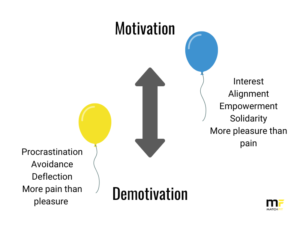
In some circumstances, people are motivated because of an alignment with their interests, or their natural inclination towards certain goals, such as succeeding in their career. Equally powerful though, is the motivation to distance ourselves from something unenjoyable or unpleasant – for instance, the company culture that becomes so unbearable that the only option is to leave. Generally, we’re motivated either towards, or away from something.

One of the reasons our CLIMB programme works so well is that it aligns group motivation towards an agreed team goal while recognising that individual goals can be personal, and quite different from each other. Within the CLIMB analogy, some will be motivated to get to the summit, whilst others are content with reaching basecamp. Both will contribute to a successful team, as long as their motivations are understood, accepted and feed into the ultimate goal.

Environment and culture obviously has a significant influence. If we work in an organisation where we’re supported, listened to, respected and valued, we’re far more likely to feel motivated, and in turn, be more inclined to embrace the goals we’re set. When the opposite is true, our leaders are likely to meet more resistance.

But, assuming we’re not at those extremes, how do we motivate ourselves in an area that’s maybe not a natural inclination for us, but is important for us in terms of our performance? At MatchFit, we use the phrase ‘wishing, hoping or really wanting to’ to drill down into how much of a priority someone has really assigned to a task or goal. Sometimes, it’s about the pain-pleasure principle – finding that point where the pain of not doing something is worse than just getting it done. And that will be part of the phenomenological experience, different for everyone.

High performance, then, is about deciding where you need to be motivated in order to improve your performance, whether you feel motivated in those areas or not. How do you flick that switch?

Making motivation a strategy

A common mistake is not making motivation a strategy. It’s almost as if there’s an expectation that you’re either going to be motivated or not, and it’s other people’s responsibility, especially in the work environment, to make sure you’re motivated. But, outside of the sports industry, where motivation is a such a key driver for performance, you don’t often hear about the need to make self-motivation deliberate. Like any skill we want to learn, or behaviour we want to adopt, we need to develop motivation as a habit, a discipline in itself to be nurtured and grown, in order to develop and maintain the thinking, behaviours and attitudes that support our goals, wherever they are. Athletes achieve this by a combination of focusing on marginal gains, breaking goals down into smaller elements, and developing consequential thinking – looking at what they will lose if they don’t do that thing they don’t really want to do, and what they will gain if they do.

Motivating ourselves when we’re stuck

Sometimes, for example, we have to accept that while we’re in a job we don’t enjoy, the risk of leaving is greater. In that circumstance, how do you develop the skill set or exercise that muscle that actually makes you motivated to do well or enjoy that job more?

Recognising that while you might not be able to leave right now, you can choose to leave at some point in the future, is helpful. You can look at the individual aspects of the job – recognise what’s not so bad, even if it’s not enjoyable. Maybe you’ve got some autonomy, or once your job’s finished at five o’clock you can go home. Maybe you don’t have far to travel and your colleagues are nice people. You can shift your mindset from ‘I hate my job’ to accepting that it’s not forever and planning an exit strategy – what you can do today, right now, every day that moves you towards that goal.

Habits for improving self-motivation

  • Make motivation a strategy
  • Decide are you wishing, hoping or really wanting?
  • Develop consequential thinking
  • Define aligned goals
  • Develop a pre-game routine to get started (we like this blog from James Clear) )

In part II, we’ll look at how we can inspire others to find and maintain their motivation, especially during challenging times.


Read Part II here

“Motivation is the fuel that drives us forward.  Moving forward drives our motivation.” Part I – Self-motivation Read More »

Subject Matter Expert or Super Leader: Can You Be Both?

Most people will be familiar with the scenario where someone who’s really good at what they do technically in their specialist area is promoted into leadership or management. But that technical expertise doesn’t necessarily equate to effective leadership, which involves taking charge, making decisions, setting direction, and fostering collaboration within a team or organisation. Effective leaders critically need strong interpersonal skills, emotional intelligence, and the ability to communicate and motivate others. Suddenly that high-flying subject matter expert (SME) is struggling to succeed in a role that actually requires quite a distinct skill set. And the importance of the dynamic that’s created by good leadership and the cohesiveness of a team is often underestimated.

So why does this keep happening?

Recognising the challenges – out of the comfort zone

Highly proficient in their respective domains, SMEs possess deep knowledge, expertise, and skills in a specific field or area, making them an invaluable asset. They often serve as go-to resources for guidance, problem-solving, and mentorship within their organisations, and their expertise and experience contribute significantly to the success of projects and initiatives related to their area of specialisation.

Particularly in technical skills-based organisations, a person may have been recruited for those skills, and then progressed up the ranks towards seniority based on that technical proficiency. They then find themselves managing people, which requires a very different set of skills. Sometimes, this can mean that team members end up with two managers—a technical manager and a people manager—which can create a tricky dynamic in itself.

Recognising the challenges – letting go

Another consideration is that it can be difficult for an SME to step away from the feeling that they have to be THE authority on their specialism. Having been accustomed to focusing primarily on their area of expertise, delving into technical details and problem-solving, they now find themselves needing to balance their technical knowledge with broader organisational perspectives. It can be challenging to shift their mindset from being hands-on experts to guiding and supporting a team.

Letting go of control and trusting others can also be challenging. SMEs often excel precisely because of their deep understanding of their field and so prefer to take ownership of tasks. They are also accustomed to sharing their expertise with others who possess a similar technical background. However, to be successful leaders, SMEs must also learn to delegate responsibilities and empower team members to contribute their own expertise and perspectives as well. They must communicate effectively with diverse stakeholders, including team members, executives, clients, and other departments. Influencing skills become essential in gaining support, driving change, and building relationships.

Clearly, some SMEs, even without training, are just naturally good leaders. They are more outwardly-focussed, and have the ability to guide, inspire, and influence others to achieve common goals.

However, what often happens is that somebody goes on management training course, but there’s little follow-up in terms of whether they’re implementing their new management skills, and doing so effectively.  Like learning any new skill, it develops over time. There needs to be some method of measuring growth and progress, through active demonstration of the skills, and feedback from others about the impact. The fact that there is some good work being done around measuring development, and yet many organisations haven’t embraced it, speaks volumes about how important it is seen to be. Which is strange when you think we measure most other aspects of a business, spend a substantial budget on training, and yet don’t apply the same ROI lens to evaluate it.

Another consideration is whether people are being provided with leadership and people management skills early enough in their careers, even before they’re ready to be a leader. Clearly, there is an investment cost in providing CPD, but many of the rapport-building and communication skills necessary for leadership are also pretty useful for employees at a much earlier stage.

Defining a Leader

A leader, on the other hand, is more outwardly-focussed, and has the ability to guide, inspire, and influence others to achieve common goals. Leadership involves taking charge, making decisions, setting direction, and fostering collaboration within a team or organisation. Effective leaders may also possess technical skills, but critically they need strong interpersonal skills, emotional intelligence, and the ability to communicate and motivate others.

Three Differences between SME and Leader

  1. Focus:

An SME primarily focuses on their area of expertise, working to deepen their knowledge and contribute specialised insights. Their attention revolves around technical aspects, problem-solving, and maintaining a high level of expertise in their field.

In contrast, a leader focuses on the bigger picture, aligning team members toward a common goal, and coordinating efforts to achieve organisational objectives. Leaders prioritise building effective teams, developing talent, and creating a positive work culture and environment.

  1. Skill Set:

SMEs excel in their technical skills, possessing a deep understanding of their domain. They become experts through years of experience, continuous learning, and honing their craft. However, technical skills alone are not necessarily sufficient for leadership success.

Leaders require a broader skill set, encompassing communication, strategic thinking, decision-making, problem-solving, and interpersonal skills. They must inspire and motivate their team members, manage conflicts, delegate tasks effectively, and foster collaboration.

  1. Perspective:

The perspective of SMEs tends to be biased towards their area of expertise. Whilst they excel in their technical knowledge, they may lack a holistic understanding of the organisation or industry.

Leaders, on the other hand, possess a broader perspective by necessity. They understand the interdependencies among different functions, teams, and stakeholders. Leaders consider long-term goals, market trends, and organisational dynamics while making strategic decisions.

The challenges when SMEs transition into leadership roles

Promoting SMEs into leadership positions can present challenges. While their technical skills are highly valuable, the transition to leadership usually requires additional development. Leadership requires a distinct skill set that goes beyond technical expertise. Effective leaders possess strong interpersonal and communication skills, emotional intelligence, strategic thinking, decision-making abilities, and the capacity to motivate and inspire others. SMEs may need to invest time and effort in developing these leadership competencies.

Limited exposure to the broader organisational or industry landscape because of a specialist technical focus can also be problematic. Leaders need to understand the interdependencies among different functions, teams, and stakeholders, and, for SMEs, adapting to a more comprehensive perspective can be a significant adjustment.

In addition, they may have limited experience in leading and managing teams, which requires resolving conflicts, providing feedback, and fostering a positive work environment. Developing people management skills is crucial for successful leadership.

Navigating the Expert-Leader paradox

Recognising that different skills are required is the first step in overcoming these challenges. Leadership is a continuous learning process and embracing growth and development is also a key leadership competency. Organisations that provide opportunities for professional development, such as leadership programmes, coaching, and mentorship—and have prospective leaders with the awareness to seek these out—are likely to benefit from the best of both worlds.

Subject Matter Expert or Super Leader: Can You Be Both? Read More »

The Art of Present Leadership

Avoiding Past Ruminations and Future Worries.

Business leaders today face a particular challenge; the need to stay ahead of the competition and mitigate for risks, while also not getting bogged down in worrying about what might happen in the future. To achieve a balance between the two, leaders must learn to embrace and lead in the present. By doing so, they can open themselves up to the opportunities of living in the here and now, and avoid the dangers of always playing it safe. In this article, we discuss the importance of leading in the present and how to achieve it.

The importance of remaining in the here and now.

In today’s fast-paced business world, it is easy to get caught up in the chaos and constantly worry about what could go wrong in the future. While it is essential for business leaders to be proactive and take necessary steps to mitigate risk, it is equally important to remain present in the here and now.

One way to achieve this is by understanding the circle of control and the circle of influence. The circle of control consists of things that are within our control, such as our thoughts and actions. The circle of influence, on the other hand, consists of things that we can influence but cannot control, such as market trends or the actions of our competitors. By focusing on what we can control, we can maintain a sense of calm and serenity, even in the face of uncertainty.

Being present in the here and now also requires us to be resourceful emotionally and in terms of activity in a phenomenological way. This means that we need to be aware of our emotions and the impact they have on our decision-making processes. It also means being open to new ideas and opportunities, even if they may seem risky.

Of course, it is important to strike a balance between risk mitigation and taking advantage of opportunities. While catastrophising is an important process for creating resilience plans, we also don’t want to be continually in a state of anxiety about what might happen.

Achieving balanced leadership means understanding that there is always an element of risk in any decision we make, but it is possible to manage that risk and make informed decisions that benefit our business. By remaining present in the here and now, we can tap into our resilience and stoicism, enabling us to navigate uncertain times with confidence, and inspire that confidence in others.

Being aware of the environment you’re working in.

As a business leader, you are likely to operate in a highly competitive environment, where you are expected to deliver results and achieve success at all costs. This pressure can cause you to lose sight of the present moment. You may become too focused on future goals, worrying about the what-ifs, and the impact that this could have on your business.

One useful way to manage this stress is to take a lesson from the military. In the military, stress testing is a common practice. It involves subjecting soldiers to a series of intense and high-pressure situations that help to prepare them for future crisis situations. This kind of training helps soldiers to remain calm and focused in the moment, even when faced with high-stress situations.

Similarly, as a business leader, it’s important to remain aware of the environment you’re working in and understand how it can affect your decisions. It’s important to acknowledge the stress and pressure that come with leading in a competitive environment. It’s equally important to learn how to manage these stressors effectively and develop strategies that help you stay focused in the present.

One approach that can be useful is mindfulness. Mindfulness is the practice of being present in the moment and not getting caught up in thoughts or feelings about the past or future. By learning to be mindful, you can better focus on the task at hand, stay present in the moment, and avoid becoming distracted by concerns about the future.

Another way to remain aware of your environment is to pay attention to the people and the culture around you. Get to know your colleagues, your clients, and your competitors. Understand what motivates them and what drives their decision-making processes. By understanding these factors, you can make more informed decisions and be better prepared to handle challenges as they arise.

What you can do when you’re stuck in the moment.

Being present is an important quality for any business leader, but what happens when you feel like you’re stuck in the moment? It’s easy to get lost in the day-to-day challenges of running a business, but it’s essential to take a step back and evaluate your current situation.

One way to do this is by asking yourself these questions:

  • What is the crux of this problem?
  • On a scale of 1- 10, how bad is this problem? What will actually happen if I don’t fix it?
  • In six months’ time, what will it look like?
  • What resources do I have available right now in terms of time/budget/people?
  • What are my actual constraints/barriers vs those that I am making assumptions about?
  • Whose expertise can I utilise? What ideas might others in my team have?

Who becomes the judge of what is considered acceptable risk?

It’s worth remembering that what may seem like an acceptable risk to you, may not be the same for others in your organisation or even for your customers and stakeholders. When making decisions about risk, it is important to consider the potential impact on all parties involved. This includes evaluating the potential benefits and drawbacks, as well as the likelihood of success or failure.

Risk is subjective and can vary depending on many factors, such as market conditions, financial stability, and company culture. Finding a balance between complete risk avoidance and taking calculated risks is a delicate process that requires constant evaluation and adjustment.

As a leader, you can establish clear guidelines and protocols for evaluating and managing risk. This can include regular risk assessments, training and education for employees, and implementing effective communication strategies to ensure everyone is on the same page.

Remember, being too cautious can limit your organisation’s potential for growth and innovation. On the other hand, taking too many risks without proper consideration and planning can have devastating consequences. Finding the right balance requires a thoughtful and proactive approach to risk management.

The importance of having a balance between the past and the future.

Business leaders are often caught up in worrying about the future or analysing past decisions, which can lead to missed opportunities in the present. On one hand, looking to the future is essential for anticipating changes in the industry, developing innovative ideas, and setting goals. However, excessive worry about what might happen in the future can be paralysing.

Dwelling too much on past mistakes or successes can be equally limiting. While it’s important to learn from past decisions, being overly preoccupied with them can keep leaders from seeing new opportunities or taking chances. The past is important to inform decisions, but it shouldn’t dictate them.

Achieving a balance between the past and future requires an awareness of the present moment.

Ultimately, it’s crucial to find a balance between mitigating for risk and living in the present moment. Business leaders must keep an eye on the future without worrying too much about it, while also learning from the past without letting it control the present. When they strike the right balance, leaders can make confident decisions that help their organizations thrive.


Achieving the ideal overall balance

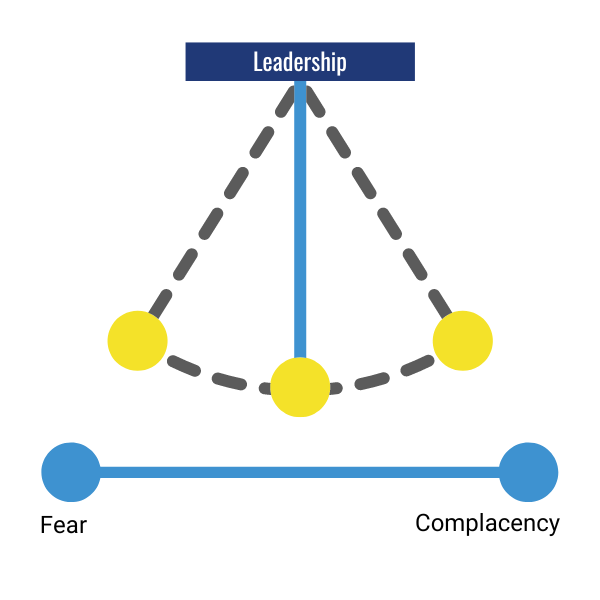
Ultimately, if you think of risk as a continuum from paralysing fear to complacency, the arc of the pendulum swing and its centre of gravity will depend on circumstances, a person’s natural phenomenological experience; and where they naturally tend to fall on that continuum. Achieving a balance is about reducing extremes, while still retaining the flexibility to react with creativity to challenges as they arise.

Achieving a balance between the past and future requires an awareness of the present moment.

The Art of Present Leadership Read More »

Organisational change can deliver real success, but commitment needs to come from the top

Bradley Honnor explains why the effort to improve the way teams and businesses operate through leadership development programmes requires engagement from the top down.

I’m often asked how MatchFit can demonstrate the ‘why’ when I discuss a leadership programme with a new client.

The answer is fairly simple. As in any purchase, it’s important to make sure the benefits are understood. You may well think that your business performance and culture are strong, but there is always room for improvement. Can ‘good’ become ‘great’? We ask that question – the honest answer is always ‘yes’.

It’s important to realise the benefits that improving from good to great can deliver for the business and what that means for the return on your investment.

We encourage clients to consider the pain and pleasure principle. The first task is to identify where they see the pain within the business. Is it poor performance, is it attrition rates? Is the senior leadership team overwhelmed, are teams and staff working in silos?

Once the pain has been identified, we can create a programme that identifies the opportunities to enhance performance and operational excellence and delivers the solutions.

Staff remain the biggest asset to any business. If you can progress, improve, enhance and build a team or organisational culture where people can thrive and take pleasure in working, the results can be significant both in performance and staff retention.

The success of any programme, however, depends on the level of engagement both during the programme itself and subsequently over time.

And that engagement has to start from the top. Senior management needs to lead by example and drive the process. More importantly, they need to been seen to drive the process. If the process is not seen to be top of the leadership agenda, it will not be top for the wider employee group.

When clear and engaged leadership is happening, we see nothing but good outcomes. When it is not, there is a significant chance that what we are trying to achieve with the client will fail.

Giving staff the time to succeed

As well as enjoying senior-staff sponsorship, the programme needs to be relevant to those participating, and to fit around their working days. People do not want to spend weeks out of the workplace, or away from their desks. The programme must recognise attendees have a day job to do and be structured to accommodate this.

Engagement also needs to go beyond the session itself. There needs to be the willingness to understand:

  • what changes are being suggested
  • why they have been suggested
  • the difference they will make to the individual and business and,
  • why it is important to put those into practice after the sessions have been completed.

Maintaining momentum post programme

Leadership development and driving change does not finish once the programme has come to an end. Maintaining momentum is vital to delivering success.

At this stage, MatchFit cannot directly influence the actions of the leadership team, so we advise creating a record of what the business and individuals say they are aiming to achieve and the actions required to do this.

That list needs to be focused and achievable. It’s better to have three or four specific actions that are more likely to be achieved, than 25 points which will be far harder to manage and record.

Team ethos and mutual accountability are also critical at this stage. Where these are strong, each member will feel responsible for playing their part and not letting the rest of the team down. Having multiple forums in which the actions can be reflected on, and success acknowledged and celebrated by the teams and wider business, is also important.

When there is strong leadership from the top, a culture of accountability, and pride and an understanding of the tools and techniques needed to affect positive change, then success is far more likely to follow.

Organisational change can deliver real success, but commitment needs to come from the top Read More »

Keeping the CLIMB momentum going – an Interview with Tim Forman

In a recent interview, MatchFit Consultant Tim Forman discussed how he has worked with the Civil Service HR Casework Team to deliver a CLIMB programme to the Official Solicitor and Public Trustee (OSPT) SLT (senior leadership team). The CLIMB programme is a multi-stage initiative that aims to improve performance and cohesion of an organisation. It includes interventions that cover technical and phenomenological aspects, as well as the CLIMB stages, which are designed to promote self-awareness, self-management, and team collaboration among others, to develop culture and achieve high performance.

This article highlights a new pilot project, called , aimed at keeping the positive momentum from the CLIMB by providing bridging support and coaching.

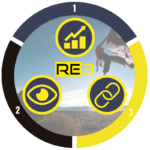
“I started working with the OSPT in the summer of 2021,” Tim explains.  “They completed a six-stage leadership CLIMB programme and have commenced the Shadow ExCo programme for 11 future leaders. In conjunction, we will be delivering a new pilot programme called RE3 aimed at continuing the momentum of the CLIMB.”

“Maintaining momentum after completing a leadership programme can be a challenge. That’s not always easy for an organisation on its own,” he says. “It’s often the case that once a programme has ended, the day-to-day stuff takes priority, and some of those valuable activities undertaken during the CLIMB pause, or timelines start to slip, because people are ‘busy’. The idea of RE3 is to provide a further step in order to keep the momentum going. We look at the results, refocus on the aims, and reinforce the skills, capability and confidence gained – hence RE3!

He praises the OSPT for their engagement and participation in the CLIMB leadership programme, which has led to excellent initiatives being taken with great results. “They have been exceptionally good across the senior leadership team, who are split into different teams. The work they’ve been engaged with has helped bring those teams together and break down silos, with lots of development actions coming out of it. They’ve been strong advocates, and very committed to following through on the actions that they’ve agreed to during the CLIMB programme. They’ve seen some very positive outcomes as a result,” he said.

Tim emphasises the importance of accountability in achieving these results, saying, “I’m sure we’ve all had the experience where an organisation decides they need to do something about issue A, understands why they need to do it and agrees on what they need to do. Then things come to a halt, because that accountability is the bit that is missing.”

“With the OSPT, they’ve been very clear on their priorities stage by stage in the programme and that has shown in the outcomes and the engagement of their people. They’ve really enthused about the ‘why’ of what they’re doing, to the extent that as the CLIMB came to an end, they were already in discussions with MatchFit around what they can do next and how we could keep that going. And the products of those conversations are that they’ve invested in the Shadow ExCo programme, and a pilot programme has been developed, which is RE3.”

The RE3 pilot project with OSPT is an exciting development for MatchFit, and Tim sees it as a valuable tool for maintaining momentum and achieving long-term results after completing a leadership programme.

He says “Whereas a standard post-programme check-in is a bit arbitrary, with RE3 there is a framework around which to keep the momentum going. So for example, if we look at the first of the RE3 elements, the results, the HR Technical Consultants are going to do an organisation-wide survey across OSPT to understand the impact of the technical and phenomenological interventions, and the six CLIMB stages.”

Apart from the survey, the results phase also includes a case audit, which will compare the current cases with those from before the programme’s implementation. The audit helps assess the impact of the programme on case handling.

At the refocus stage, two-way discussions are held with the key stakeholders to look at the survey and the case audit comparison and gain an understanding of OSPT’s perspective, refocus the client’s aims and objectives, highlight successes and identify areas for improvement.

Tim continues “There is also a wellbeing check led by the HRTC through 10 one-to-one meetings, and a workshop where we’ll talk about the impact both personally and professionally. And then the refocus will highlight wins, what’s been achieved and what’s still outstanding in terms of next steps.”

The final phase is reinforcing, consisting of a three-module coaching programme led by the HRTC. The aim of this is to upskill OSPT staff in coaching skills for the coaching and development of their own people. They’ll have a phenomenological toolbox of practical tools tailored to the needs of their clients. MatchFit then run a combined mediation and positioning session with the senior leadership team and the wider first line management team.

“This is an exciting phase,” says Tim. “We run sessions with the first line management team, combined with the SLT, where they are encouraged to understand one another’s perspectives, and, typically, reinforce the cultural changes and high performance identified throughout the CLIMB programme.”

Outcomes

In the beginning stages of any programme, there can be a degree of scepticism in some quarters. But the realisation that a senior leadership team are keen to share the room with line managers and work together, and the opportunity for line managers to enjoy a safe space to really get down into the details some of the subjects they wanted to talk about, quickly dispel any hesitancy.

Tim says “OSPT fully embraced the CLIMB programme, and their commitment to actions and belief in the process grew from early uncertainty, resulting in the achievement of quality outcomes. There was genuine appetite to develop the programme for the wider management cohort and their teams. The programme included a range of judiciously selected interventions, and the tremendous take-up across OSPT demonstrated.”

“The strength of our programmes is that we get to work people over a period of time,” he continues. “This is why recognising that every minute they spend with me, or in a one-to-one, or in coaching is time they’re not doing something else. So it’s got to be inherently valuable. If we have three hours in the room, with 10 people, that’s 30 hours of their time. There have to be top quality outcomes to make that 30 hours more valuable than anything else they will be doing in that time.”

Tim concludes “It’s important to highlight the commitment delivered by OSPT in wanting a continuation of the work the HRTC have been doing with them. It’s exciting for us at MatchFit to develop the RE3 pilot to support the growth, keep up the momentum gained in the CLIMB and develop leaders for the future. In doing so, we have the opportunity to learn from it with them and develop a programme we can share more widely. It’s a win-win!”

You can read the previous interview with Tim here

Keeping the CLIMB momentum going – an Interview with Tim Forman Read More »

The Phenomenological Core of CLIMB

An interview with Bradley Honnor

In this article, MatchFit MD Bradley Honnor talks all things ‘phenomenological’ and how this philosophy is at the very heart of MatchFit and the CLIMB people development programme.

“Phenomenology is about the individual experience that each and every one of us has,” says Bradley. “If we all go to the same party, we will all have a different experience. Everyone might say they enjoyed it, but in reality we’ve each had a different evening to the others that were with us. Everybody thinks and behaves uniquely and phenomenology is the phenomenon of that individuality. It goes beyond the collective experience.”

“In a work context, if MatchFit is delivering to a group, everyone in the group saying they enjoyed the day is not a particularly useful insight, because each person will have had a unique experience,” he continues. “We want to tap into that uniqueness, because that’s where the real value lies for an individual.”

With MatchFit’s CLIMB programme, integrating this uniqueness is inherent in everything that the team does.

“Most leadership programmes work through off-the-shelf content that may or may not fit with each individual in the session,” says Bradley. “It’s fairly typical to be sent on a training programme about delegation, for example. But if an attendee doesn’t have a team, the day becomes irrelevant, and that person won’t engage.”

Every CLIMB is very much about focusing on what each individual needs, even within a group, which is why one-to-one, as well as group work is undertaken.

“We’ll sit down with *John* to look at Mastery, which is all about *John* becoming an expert in what he does. We’ll look at what he needs, his strengths and what development areas are relevant for him specifically,” continues Bradley.

The CLIMB facilitates somebody’s personal learning journey towards their own development. This can often be in a group environment. And when the group is brought together, it’s a collective because the group will have joint goals that it needs to achieve together.

“You can speak to that group as a collective in regard to its collective goals. But each individual will have a unique input and perspective on making those goals happen in their own specific areas. That’s why the CLIMB has always taken a phenomenological approach.

When we talk about  changing a culture, for example, what do we actually mean? Because the culture at work is going to be experienced differently by each individual. Some will find it fast-paced and exciting; others will find it high-pressured, oppressive and overwhelming. It’s the same culture externally, but it’s not necessarily the same culture individually. There is a phenomenological element, because of how we each interpret our particular environment in the context of how we’re experiencing it, here and now.” Bradley continues.

MatchFit consultants work with a group around their collective goals, and with individuals in terms of their individual contribution towards those goals. This explores issues such as motivation, and whether attendees actually want to do the type of activity that’s needed in order to deliver those collective goals.

“It’s not an approach that’s unfamiliar in coaching, but it differentiates MatchFit from other companies that deliver leadership programmes. Most leadership programmes provide prescribed content, which is what clients see and buy into. But we don’t have content and we don’t try to sell in that way – which does prove challenging at times!

What we actually want to do is go into a room with a team and a flip chart, pen and a blank piece of paper and ask ‘So what’s going on? What are the goals? What needs to happen to deliver those goals? What are the challenges and barriers?’

It’s a very effective methodology because everyone is identifying their own priorities, what’s important to them and what they want to engage in first. So you’ve got them on board immediately. You don’t have people sitting on the CLIMB wondering why they are there, because everybody has been able to contribute to the reason why they are there,” Bradley continues.

The CLIMB is a dynamic process with priorities often changing and evolving as the needs of the group and individuals within the group change.

“What’s important today might not be so important tomorrow,” Bradley points out. “And that’s okay. We don’t have to finish something purely because it’s been started. We can, and should, pivot very quickly according to need. That’s different to being in the middle of a standard leadership programme module, where you’ve either got to carry on, regardless of whether it’s relevant or not, or drop out and not complete it.

I often cite the example of making a presentation. You’ve prepared all your slides and know what you’re going to say. You’re halfway through your presentation and someone asks a question. In response to that question, you show them something on the flip chart that wasn’t in the presentation and may not even have been even relevant to its content. Then at the end of that day when you ask people what the most impactful part of session was, more often than not, they will say the moment when you discussed what was on the flipchart.

But on the whole, we’re just not used to operating like that. If you went on a leadership course, you’d want to see the content. You’d want to know what you’re covering on day one, when the breaks are, and how long the breaks are. Right from our school days we’ve had structure [a curriculum] and we are fed learning whether we want it or not. And adult learning is very similar.”

Bradley concludes, “This is why CLIMB has been so successful. It is different, because of that core phenomenology that’s fundamental to everything we deliver. And that is really important to MatchFit – because it’s what we know will ultimately deliver the best results for our clients.”


The Phenomenological Core of CLIMB Read More »

One Step Removed – the Challenges of Leading Remote Teams

By Bradley Honnor

With remote and hybrid working set to become normal working practice rather than a temporary emergency fix for some time to come, it’s interesting to note that levels of ‘quiet quitting’ and burnout reported in the workplace have rarely been higher. A Deloitte survey (1) found that 28% of employees either left or were planning to leave their jobs in 2021, with 61% citing poor mental health as the reason.

For many, the opportunity to avoid the commute and arrange work hours around life commitments has proved invaluable. But there’s little doubt that this flexibility can come at a cost, and does not always lead to increased productivity (2). For some remote workers, it’s harder to switch off, and many are reporting working longer hours since working from home (3).

Some major challenges fall out of this for leaders – how to guard against employee burnout, and how to keep staff motivated, creative and engaged, when face-to-face contact and those serendipitous ‘ah ha’ moments around the coffee machine have been all but eliminated.

The risk of burnout

It’s a sad fact that most of the organisations MatchFit are working with are talking about burnout to some degree. Many people feel like they, or someone they know, are heading towards a state of physical and emotional exhaustion. They’re using phrases like ‘unsustainable workload’ or ‘high-pressure culture’. Feelings of isolation can also affect mental health. People will be heading towards burnout if these issues aren’t resolved.

If burnout isn’t addressed, it can develop into a mental breakdown. You can often recognise when stress has become a problem by observing behaviours. People withdraw, or interact with others differently. Their behaviour or expression of their personality alters to some degree. It can escalate to the extent that it becomes associated with a culture of bullying, harassment and discrimination, because everyone is under stress, suffering from work pressures and taking it out on their colleagues.

This type of behaviour can become normalised, which means a lot of us are working in a very unhealthy way. Lots of people are working very late without lunch, or aren’t leaving their desk at all, because they’re working from home. They’re spending evenings and weekends working. We work with enough organisations to know that many people think this is normal!

However, there’s a whole continuum of things that happen before that point is reached, which does present an opportunity for intervention. It’s also important to recognise the difference between healthy levels of stress, such as those experienced with an approaching deadline, and the cumulative effects of prolonged stress from which periods of recovery have not been built in.

It’s also quite interesting to recognise that this is the opposite of how younger generations want to work. They are actively seeking—if not demanding—a different way.

So, one of the many challenges for leaders becomes ‘how do we pull apart the entrenched cultural mindset that long days and unhealthy ways of working are necessary evils for career progression, whilst reproducing the environment of creativity, learning and engagement that traditionally arose from office-based personal interactions?

Engagement is key

As a leader, you have to be smart and flexible, because if you insist that somebody works in a way that they don’t want to work, then they’re not going to stay around for very long. We know that a key motivator is for people to have autonomy and feel that they’re in control of how they work. A leader needs to accommodate this, because if they don’t, it’s going to backfire on them.

There’s plenty of evidence (4) supporting the model that flexibility in the way we’re allowed to work is as—if not more—productive than traditional patterns of long hours in the office with no lunchbreak, not least because that can lead to burnout. Leaders of today need to approach the issue with an open mind and work out how best to incorporate flexible working in a way that benefits both employees, and the business objectives.

However, creating connections and engaging with people working remotely is a different challenge. People do like to work remotely. There’s a ‘back to work’ policy right across the Civil Service now and a lot of people don’t want to come back. A survey (5) by broadband provider Gigabit Networks found that while 83% of businesses wanted their employees to be based in the office for at least three days per working week, only 20% of employees were prepared to do it.

Goals that motivate

Encouraging feelings of engagement with the business and with each other is harder to achieve when people are working remotely, so that isolation factor needs consideration. But motivating someone at home is not so very different to motivating them in the office. It centres around setting goals with a sense of purpose that inspire and stretch people, but not to the extent that they’re overwhelmed.

A sense of purpose and people feeling valued are key to intrinsic motivation. People need to feel important and that they have a voice. That’s one of the fundamental elements of the MatchFit CLIMB programme. Attendees are encouraged to identify and work through issues that are challenging to them, whether that’s a more junior member of staff wanting to be more confident in the workplace or a senior leader wanting to create a more engaged and motivated workforce.

How do you engage people and connect them together?

There is no magic wand. The unavoidable fact is that it takes effort – teams need to be bothered about getting together. We are, though, seeing an increase in teams getting together more from a social perspective. The work may be online, but when the team gets together, it’s actually to socialise.

It’s a given that managers should be asking how people are, and checking in to see how they are doing on a regular basis. But creating well-curated opportunities for people to convene, share ideas and feel a common purpose are also essential. Meetings for the sake of them just won’t cut it anymore, and are a waste of everyone’s time. But not every collaborative event has to have a firm agenda – informal virtual ‘drop-ins’ also have a role to play. They can be an enjoyable, low-pressure, way of fostering relationships, and some organisations have used them very successfully to enhance team cohesion.

And this is really important for creativity and innovation – we need to be bouncing ideas off other people. How many times has a throwaway remark or half-baked idea from one person, actually evolved into something tangible once another mind has engaged with it?

Ultimately, good management—and good corporate responsibility—is really thinking about how you connect people who are working remotely. This is the new world of work, so what is the plan?


References

1) https://www2.deloitte.com/uk/en/pages/press-releases/articles/poor-mental-health-costs-uk-employers-up-to-pound-56-billion-a-year.html

2) https://www.managementtoday.co.uk/people-productive-home-just-working-longer-hours/hybrid-working/article/1712476

3) https://lawyerfeedhub.com/news/emails-at-2am-and-no-holiday-respite-lawyer-reveals-work-life-struggles-news/

4) https://www.gartner.com/smarterwithgartner/digital-workers-say-flexibility-is-key-to-their-productivity#:~:text=Flexible%20work%20hours%20is%20key,them%20to%20be%20more%20productive.

5) https://www.computerweekly.com/news/252528787/Remote-workers-shun-return-to-work


Further reading

https://www.hse.gov.uk/statistics/causdis/stress.pdf

https://hbr.org/2019/12/burnout-is-about-your-workplace-not-your-people

Health and wellbeing benchmarking tool launched

By the Numbers: Employee Burnout, Workplace Discrimination, and the Great Resignation

The financial cost of job burnout

Once burned out, twice shy: The unaffordable cost of work-related stress

https://financialpost.com/fp-work/worker-financial-stress-employers-cost-billions


One Step Removed – the Challenges of Leading Remote Teams Read More »

MatchFit Testimonial

An Interview with the Governor of HMP Send

Having spent 16 years as a freelance management consultant, Tim was looking for a new challenge when he came upon MatchFit. We asked him about the experience he has gained over his career and how partnering with MatchFit has proved to be the perfect fit.

An experienced trainer, coach, facilitator and management consultant, Tim’s initial career choice was actually teaching.

How did your career begin?

“I trained as a teacher,” he explains. “But those were the days when teaching jobs were hard to find, so I decided to move into sales, which I loved. I worked in financial services sales and management, in leadership and national leadership.”

However, when he was made redundant 18 years ago, he felt it was time for a change in direction.

“When I was made redundant, it gave me a chance to reflect and think, ‘What would I like to be doing next?’. I’d met one or two people at various events, working on their own in training, coaching and management consulting and I thought, ‘I’m going to give that a try’.”

Tim utilised the skills gained during his time within financial services and banking to train and advise companies across the financial services sector.

“The demand from businesses was varied” he explains. “From sales skills to management skills, leadership and coaching, development skills and then products, I’d often be brought in as part of a wider team to support learning around particular products or systems.”

He also worked with SMEs on core business skills to support their aspirations for growth.

“For SMEs, I was delivering a wide range of support to enterprises keen on growing their businesses, such as managing cash flow and debt, and developing the business. I would arrange sessions around networking, for example. I also had some specific coaching work.”

Tim has always believed in the importance of his own personal development to enhance his client role and qualified as a Level Seven coach through the Chartered Management Institute in 2009.

“I’d done a lot of coaching in my financial services leadership and management work. As my freelance business grew, I felt it was important to gain appropriate qualifications, such as the Diploma in Financial Planning, which is essential for those working in financial services. I was constantly looking out for things that I could add to my skill set.”

How did you come to work with MatchFit?

“I was looking for a new opportunity in 2020 and MatchFit posted that they were looking for facilitators. I contacted them, spoke to Emily Courtney, who introduced me to Bradley, and then I was introduced to the company’s connections in the Civil Service.

Initially my work was with the Probation Service, HM’s Courts and Tribunals Service and a private sector company. I then went on to work with the Prison Service across four establishments.

What are you working on now?

“This year, I’ve been working with the Department for Education, and on a number of programmes for the Official Solicitor and Public Trustee. I’m also working with Civil Service HR Casework and, earlier in the year, continued my work with the Prison Service.

In addition, with a private sector client, I am delivering a Leadership and Management Programme for MatchFit of six modules over a number of months, and that will run into next year.”

Tell us about the MatchFit CLIMB High Performance Teams programme you’re facilitating

Tim explains. “If you imagine a senior leadership team, wanting to develop and embed high performance, their goal is to get everyone pulling in the same direction, including the wider management team.

For the whole team to be high performing, it’s all about culture. It is very much about valuing their people, working with their people, and we support them to do that, whilst helping to identify sustainable solutions to issues identified that may block performance.”

He continues: “So it’s about identifying with people, what actions they can commit to, and how committed they are to doing those actions. How they’re going to know they’re delivering, and how they’re going to measure outcomes. And that’s how you begin to measure change. You start measuring both in terms of people’s learning, but also very importantly, in terms of their behaviour. A fantastic example of a public sector area in the Civil Service who absolutely embraced the programme, driven by their senior leadership team, is the work with the Official Solicitor and Public Trustee. The programme was not without some behavioural and historic cultural challenges to overcome, but it has worked exceptionally well.”

Have you experienced any unexpected benefits?

“I have been working with MatchFit for over two years now and I have thoroughly enjoyed it. It is great work, and they are great people to work with.

I have found the work fascinating, challenging, interesting. It’s also quite liberating, because when you go into prison, you can’t take your phone. The removal of your phone means you are temporarily cut off from parts of modern life. You cannot check your emails, for instance.

You quickly get to know about the prison culture, because before you go anywhere you need to prepare. You find out what you can and can’t do. For instance, if you want to take a laptop in, it needs to be registered in advance.”

He adds: “The culture is very hierarchical in prisons, and like a large part of the Civil Service, grade is an important thing.

You are working with senior leadership teams. HMP Bure is a good example of running a three-stage CLIMB where they committed to actions, and they have delivered on actions during that CLIMB. And they continue to deliver, after that CLIMB’s conclusion. As a result of the programme, they’re no longer saying, ‘we’re going to do 20 things’. If you try to do 20 things, you’ll probably do none, because you’re overwhelmed. If you start with two or three and then add another two or three things and you’re committed to them, then you are more likely to achieve your aims. Witnessing these outcomes is very rewarding.“

What is it you particularly enjoy about the work?

“The phenomenological methodology is something that I love and embrace,” he says. “And it’s been a lot of learning for me, because it is so different. But I think once it clicks, you can clearly see the rationale for the steps you are taking.

“I have found the CLIMB programmes tremendous to work on because they are proven to succeed; they do bring measurable results.”

Finally, how do you enjoy your downtime?

“Outside of MatchFit and work, I keep busy with my family, and my support for Newcastle United. Living close to the Yorkshire Dales, I’m a keen walker – the reward of finding a good pub is incentive enough!”

Tim is also in demand as an events speaker.

“I do not see it as work, as, like work, I enjoy it,” he explains. “I speak to clubs and societies and I’m now speaking at events and dinners, which I thoroughly enjoy. But you have to be well-prepared. You don’t want to be in front of a room of 300 people and all of a sudden you think ‘oh my gosh, what am I going to say next? “

Tim also uses the opportunity to raise money for a charity close to his heart – the Leeds-based Candlelighters Children’s Cancer charity, in memory of a family friend who was supported by the charity some years ago.

“When I’m speaking, the fee goes to the charity. I like that because it’s a win-win. I get to speak, the organisation gets a speaker and the charity receives some much-needed funds.”

You can read the HMP Send case study here

An Interview with the Governor of HMP Send Read More »

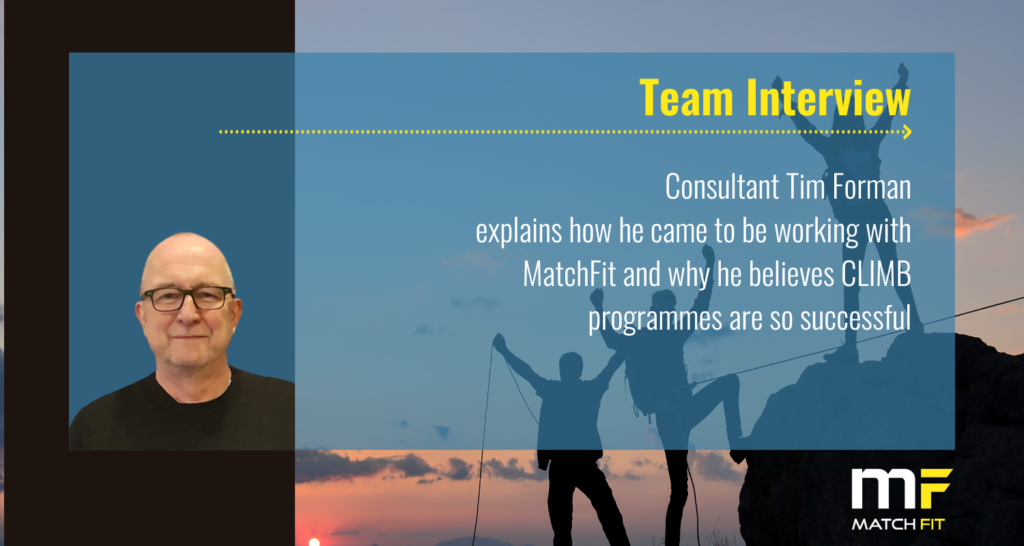
An Interview with Consultant Tim Forman

Having spent 16 years as a freelance management consultant, Tim was looking for a new challenge when he came upon MatchFit. We asked him about the experience he has gained over his career and how partnering with MatchFit has proved to be the perfect fit.

An experienced trainer, coach, facilitator and management consultant, Tim’s initial career choice was actually teaching.

How did your career begin?

“I trained as a teacher,” he explains. “But those were the days when teaching jobs were hard to find, so I decided to move into sales, which I loved. I worked in financial services sales and management, in leadership and national leadership.”

However, when he was made redundant 18 years ago, he felt it was time for a change in direction.

“When I was made redundant, it gave me a chance to reflect and think, ‘What would I like to be doing next?’. I’d met one or two people at various events, working on their own in training, coaching and management consulting and I thought, ‘I’m going to give that a try’.”

Tim utilised the skills gained during his time within financial services and banking to train and advise companies across the financial services sector.

“The demand from businesses was varied” he explains. “From sales skills to management skills, leadership and coaching, development skills and then products, I’d often be brought in as part of a wider team to support learning around particular products or systems.”

He also worked with SMEs on core business skills to support their aspirations for growth.

“For SMEs, I was delivering a wide range of support to enterprises keen on growing their businesses, such as managing cash flow and debt, and developing the business. I would arrange sessions around networking, for example. I also had some specific coaching work.”

Tim has always believed in the importance of his own personal development to enhance his client role and qualified as a Level Seven coach through the Chartered Management Institute in 2009.

“I’d done a lot of coaching in my financial services leadership and management work. As my freelance business grew, I felt it was important to gain appropriate qualifications, such as the Diploma in Financial Planning, which is essential for those working in financial services. I was constantly looking out for things that I could add to my skill set.”

How did you come to work with MatchFit?

“I was looking for a new opportunity in 2020 and MatchFit posted that they were looking for facilitators. I contacted them, spoke to Emily Courtney, who introduced me to Bradley, and then I was introduced to the company’s connections in the Civil Service.

Initially my work was with the Probation Service, HM’s Courts and Tribunals Service and a private sector company. I then went on to work with the Prison Service across four establishments.”

What are you working on now?

“This year, I’ve been working with the Department for Education, and on a number of programmes for the Official Solicitor and Public Trustee. I’m also working with Civil Service HR Casework and, earlier in the year, continued my work with the Prison Service.

In addition, with a private sector client, I am delivering a Leadership and Management Programme for MatchFit of six modules over a number of months, and that will run into next year.”

Tell us about the MatchFit CLIMB High Performance Teams programme you’re facilitating

Tim explains. “If you imagine a senior leadership team, wanting to develop and embed high performance, their goal is to get everyone pulling in the same direction, including the wider management team.

For the whole team to be high performing, it’s all about culture. It is very much about valuing their people, working with their people, and we support them to do that, whilst helping to identify sustainable solutions to issues identified that may block performance.”

He continues: “So it’s about identifying with people, what actions they can commit to, and how committed they are to doing those actions. How they’re going to know they’re delivering, and how they’re going to measure outcomes. And that’s how you begin to measure change. You start measuring both in terms of people’s learning, but also very importantly, in terms of their behaviour. A fantastic example of a public sector area in the Civil Service who absolutely embraced the programme, driven by their senior leadership team, is the work with the Official Solicitor and Public Trustee. The programme was not without some behavioural and historic cultural challenges to overcome, but it has worked exceptionally well.”

Have you experienced any unexpected benefits?

“I have been working with MatchFit for over two years now and I have thoroughly enjoyed it. It is great work, and they are great people to work with.

I have found the work fascinating, challenging, interesting. It’s also quite liberating, because when you go into prison, you can’t take your phone. The removal of your phone means you are temporarily cut off from parts of modern life. You cannot check your emails, for instance.

You quickly get to know about the prison culture, because before you go anywhere you need to prepare. You find out what you can and can’t do. For instance, if you want to take a laptop in, it needs to be registered in advance.”

He adds: “The culture is very hierarchical in prisons, and like a large part of the Civil Service, grade is an important thing.

You are working with senior leadership teams. HMP Bure is a good example of running a three-stage CLIMB where they committed to actions, and they have delivered on actions during that CLIMB. And they continue to deliver, after that CLIMB’s conclusion. As a result of the programme, they’re no longer saying, ‘we’re going to do 20 things’. If you try to do 20 things, you’ll probably do none, because you’re overwhelmed. If you start with two or three and then add another two or three things and you’re committed to them, then you are more likely to achieve your aims. Witnessing these outcomes is very rewarding.“

What is it you particularly enjoy about the work?

“The phenomenological methodology is something that I love and embrace,” he says. “And it’s been a lot of learning for me, because it is so different. But I think once it clicks, you can clearly see the rationale for the steps you are taking.

“I have found the CLIMB programmes tremendous to work on because they are proven to succeed; they do bring measurable results.”

Finally, how do you enjoy your downtime?

“Outside of MatchFit and work, I keep busy with my family, and my support for Newcastle United. Living close to the Yorkshire Dales, I’m a keen walker – the reward of finding a good pub is incentive enough!”

Tim is also in demand as an events speaker.

“I do not see it as work, as, like work, I enjoy it,” he explains. “I speak to clubs and societies and I’m now speaking at events and dinners, which I thoroughly enjoy. But you have to be well-prepared. You don’t want to be in front of a room of 300 people and all of a sudden you think ‘oh my gosh, what am I going to say next? “

Tim also uses the opportunity to raise money for a charity close to his heart – the Leeds-based Candlelighters Children’s Cancer charity, in memory of a family friend who was supported by the charity some years ago.

“When I’m speaking, the fee goes to the charity. I like that because it’s a win-win. I get to speak, the organisation gets a speaker and the charity receives some much-needed funds.”


Back to Blog

An Interview with Consultant Tim Forman Read More »

CLIMB Case Study: Building a high-performing global team

In this case study, we describe the challenges faced by a leading Financial Services provider, and how the MatchFit CLIMB model was used to deliver the objective of building a culture of trust and positive team relationships.

THE CHALLENGE

Managing a virtual global team of 40 people presents many challenges, even for an experienced leader. The Head of Marketing managed a team of very capable individuals working globally, but there were a number of ingrained behaviours across the team that needed to be addressed.

Lack of face-to-face interaction, together with working across cultures, time zones and with different nationalities created challenges that were difficult to manage. This resulted in mistrust among team members, a lack of team identity, poor collaboration and communication, and not having a sense of control over the collective agenda.

Aware that there were some complex personalities in their leadership team, the Head of Marketing recognised this as an opportunity to develop the team further. She sought a professional development solution that would enhance trust and drive increased collaboration and high performance at an individual and team level.

THE SOLUTION

MatchFit’s expertise in working with global and virtual teams meant we were able to create a bespoke programme (CLIMB – Building a High Performing Global Team) that would deliver against defined success criteria:

  • Engender a sense of trust among the team by exploring and resolving issues
  • Support the development of a team identity which embraces the dynamic of ‘I have your back’
  • Explore individual and team collaboration and identify measurable progression
  • Ensure control and governance over the collective agenda
  • Develop commitment, intensity and motivation towards the above objectives through a development pathway.

DELIVERY

Due to the virtual nature of the team, some of the sessions were conducted remotely and materials were available through a cloud platform. The marketing leadership team followed the three-phase MatchFit Development Pathway over a two-year period, which ensured careful analysis, design, delivery and measurement.

No alt text provided for this image

YEAR 1

Working with senior leaders and the wider team 

  • Focused on the ‘Identify’ and ‘Innovate’ phases which included:
  • Base Camp team workshop
  • Online survey
  • Interviews with managers and team individuals, including reflective feedback
  • Development of bespoke training modules.

Base Camp team workshop

A face-to-face offsite workshop for 40 people focused on the challenges and good practice of working in global and virtual teams. It generated conversations around some of the challenges and focused on what the team could do to move forward in order to build trust, identity, collaboration and gain a sense of control.

Online Survey

Post Base Camp, we conducted an online survey across the whole team, asking a series of questions relating to:

  • Their objectives and the challenges they thought were blockers to success
  • What support they might need to unlock those challenges
  • What development they might need to take them to the next level of maturity in their career.

Interviews with managers and team individuals, including reflective feedback

A series of interviews at a senior leader and team level were carried out to dig even deeper. This helped identify individuals’ development areas and we were able to reflect back what their line manager thought they were, to see if they were aligned.

Development of training modules

Based on all the research and feedback gained, we designed 10 training modules that could be delivered virtually to address the key development areas that had been identified. Examples included: building trust, collaboration and your role, developing your leadership style, black box thinking etc.

YEAR 2

Working with the senior leadership team

Based on the ‘Initiate’ phase of the MatchFit Development Pathway, the key areas of focus below were agreed with the aim of strengthening relationships, collaboration and communication. In particular, unlocking tension between specific individuals within the team was also highlighted as an objective:

  • Leadership team dynamics
  • Individuals within it and their styles
  • Supporting the team through change.

This was delivered through:

  • Leadership team group sessions – setting personal commitments to change
  • One to one coaching including targeted development work with individuals to address behaviours that impact negatively on the team dynamic
  • Sensitive coaching and intervention work with individuals at a lower and more senior level to unlock tensions.

OUTCOME

“A lot of the time, this kind of support feels like a ‘nice to have’ when you have a certain amount of budget for CPD. But what I would say now, going into year three, it has to be there. It’s enormously helpful to me as a leader and the people on my team. I don’t think we would want to do without this support. The coaching support I received has helped me navigate some of the complex personalities in my team who all demand a different approach.” Head of Marketing

The impact of CLIMB – Building a High Performing Global Team has been a success story for the Marketing team. The Head of Marketing has seen a dramatic difference across all of the team and in some individuals in particular. In the 2018 company Employee Survey, the marketing team’s Leadership Survey results were the best in the whole business by quite some measure and better than the ‘Best in Class’ external benchmark.

The programme leader and coach, was viewed as an external sounding board and ‘critical friend’ who helped team members focus on their goals and put strategies in place to address their development needs. The Head of Marketing was able to gain an external and independent view of their team.

In relation to the objectives set out at the beginning of the programme, success can be demonstrated in all areas:

Engender a sense of trust among the team by exploring and resolving issues

  • A significant shift is now evident regarding the level of trust within the team. Individuals are instantly more open and honest with each other about ‘work stuff’, so issues can be resolved before they escalate.
  • The team are now more open about sharing accountability across some of the delivery areas and less protective of their ‘turf’
  • The Head of Marketing has gained more trust with their team by empowering staff to manage the agenda on projects.

Support the development of a team identity which embraces the dynamic of ‘I have your back’

  • Most team members have ‘dusted off their sharp edges’ and are now demonstrating collective trust and accountability across marketing projects relating to a number of vendors and internal stakeholders.

To explore individual and team collaboration and identify measurable progression in this area

  • Three team members working together on the customer experience agenda have demonstrated great collaboration, trust and accountability which is delivering benefits to their customers.
  • As a result of the personal one-to-one coaching and intervention work, one individual has made the biggest change in their approach and behaviour, unlocking tensions within the team which has been noticed by the Executive team.

Ensure control and governance over the collective agenda

  • The one-to-one coaching sessions were extremely helpful in enabling team members to have a private space to talk about what was stopping them from doing/achieving certain things, and this has been helpful in guiding the collective agenda.

“There are a lot of facilitators and coaches who run programmes, but Bradley builds trust and engagement. He is not superior towards people, he comes down to people’s levels and that openness is what leads to results. People are not scared of being vulnerable with him – he is independent and not part of a big organisation” Head of Marketing

Do you have a team challenge we can help with?

Please contact Bradley Honnor:

EMAIL: bradley@matchfit.com TEL: +44 (0)20 3145 0580

CLIMB Case Study: Building a high-performing global team Read More »